Featured Article
Why Fall Rain Raises the Risk for Commercial Mold Remediation
Fall rain does more than soak a building from the outside. It exposes every weak point in a commercial roof, and the moisture that slips through can set the stage for costly commercial mold remediation weeks or months after the storm has passed. Property managers who understand how a small roof leak becomes a hidden moisture problem are better positioned to act early, and a thorough commercial roof evaluation is often the first step in stopping the problem at its source.
In this guide, we will cover:
- How fall rain turns minor roof leaks into mold problems
- Four roof conditions that raise mold risk each autumn
- Early warning signs of moisture trouble inside the building
- How roof condition affects the likelihood of mold growth
- Answers to the questions property managers ask most
How Fall Rain Turns Roof Leaks Into Mold Problems
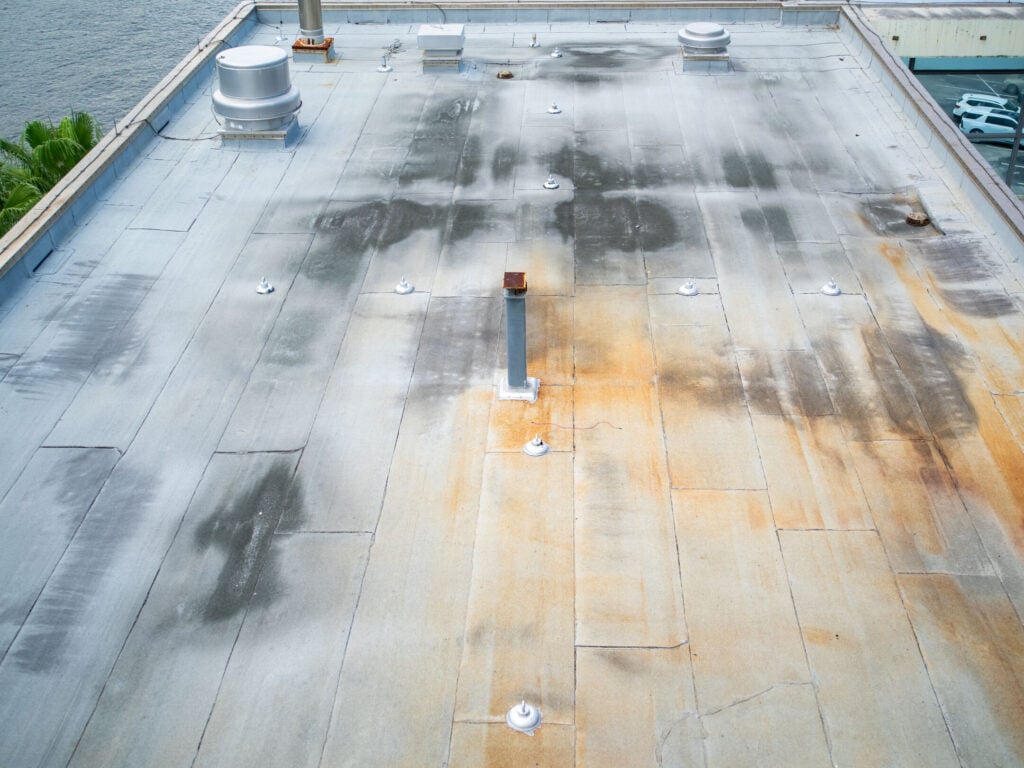
Autumn brings a mix of conditions that help mold spores take hold: steady rain, cooler temperatures that slow drying, and falling leaves that clog drainage. A roof that handled summer storms without trouble can start leaking once water has more time to sit and find its way through seams and penetrations. Because many leaks start above the ceiling, the moisture can spread through insulation and drywall long before anyone notices a stain, and mold can grow within 48 to 72 hours after water exposure.
The EPA’s guidance for commercial buildings is direct about where prevention begins. It explains that mold control comes down to moisture control, and leaks in the building envelope should be fixed as soon as possible, which puts the roof at the center of any serious mold prevention plan.
Buildings across Memphis, TN, deal with humid air, frequent fall rain bands, and mild temperatures that keep damp materials from drying out quickly. We’re proud to serve home and business owners in Memphis, TN, and nearby communities with commercial roofing services and more.
Why Mold Remediation Fails Without a Roof Fix
Removing mold without fixing the water source is one of the most common and expensive mistakes a property owner can make. Commercial mold remediation services can handle the mold removal process by pulling out contaminated materials and treating affected areas, but if the roof continues to leak, moisture returns and mold follows. That cycle can repeat several times, with each round adding cost, tenant disruption, and potential health concerns. Even professional mold remediation only holds up when the roof repair closes the entry point, so the building stays dry once the restoration process is finished. Regulatory compliance with OSHA and EPA guidelines is critical during remediation, and hiring certified remediation professionals ensures adherence to industry standards. The mold remediation process works best when the roofing work and the cleanup are planned together, and routine moisture management, including regular roof inspections and clear drainage, helps prevent future mold problems. Advanced Solutions focuses on that second half, repairing the roof problems that feed moisture into the structure.
4 Ways Fall Rain Raises Mold Risk on Commercial Roofs
These four conditions show up again and again when a property manager discovers mold after a rainy autumn.
1. Clogged Drains, Gutters, and Scuppers
Falling leaves and debris collect in drainage points all fall, and a blocked outlet can leave water sitting on a flat roof for days. That standing water finds seams and penetrations that stay dry the rest of the year.
- Ponding water: Water that sits more than 48 hours increases the chance of leaks and keeps roofing materials wet.
- Overflow damage: Backed up gutters and scuppers can push water behind flashing and into wall cavities.
2. Failed Flashing and Aging Sealants
Flashing around HVAC units, vents, and parapet walls takes the brunt of temperature swings all summer. By fall, cracked sealant and loosened flashing give rain a direct path into the building envelope.
- Penetration leaks: Rooftop equipment curbs are a leading entry point for wind driven rain.
- Hidden spread: Water entering at flashing often travels along framing before it shows up inside, which hides the true source.
3. Worn Membrane Seams and Punctures
A membrane that has been stressed by summer heat and foot traffic may have small seam separations or punctures that only leak under sustained rain. Fall storms are often the first real test those weak spots face in months.
- Seam separation: Lifted or open seams let water reach insulation and decking below.
- Small punctures: Minor tears from debris or maintenance traffic can leak slowly for weeks without a visible sign.
4. Saturated Insulation and Trapped Moisture
Once water gets beneath the membrane, insulation acts like a sponge and holds moisture against the roof deck. Wet insulation dries slowly in cool autumn weather, which gives mold the sustained dampness it needs.
- Slow drying: Cooler temperatures and shorter days reduce evaporation, so wet materials stay damp longer.
- Hidden growth: Mold can develop above ceilings and inside wall cavities long before odors or stains appear.
Early Warning Signs of Moisture Trouble
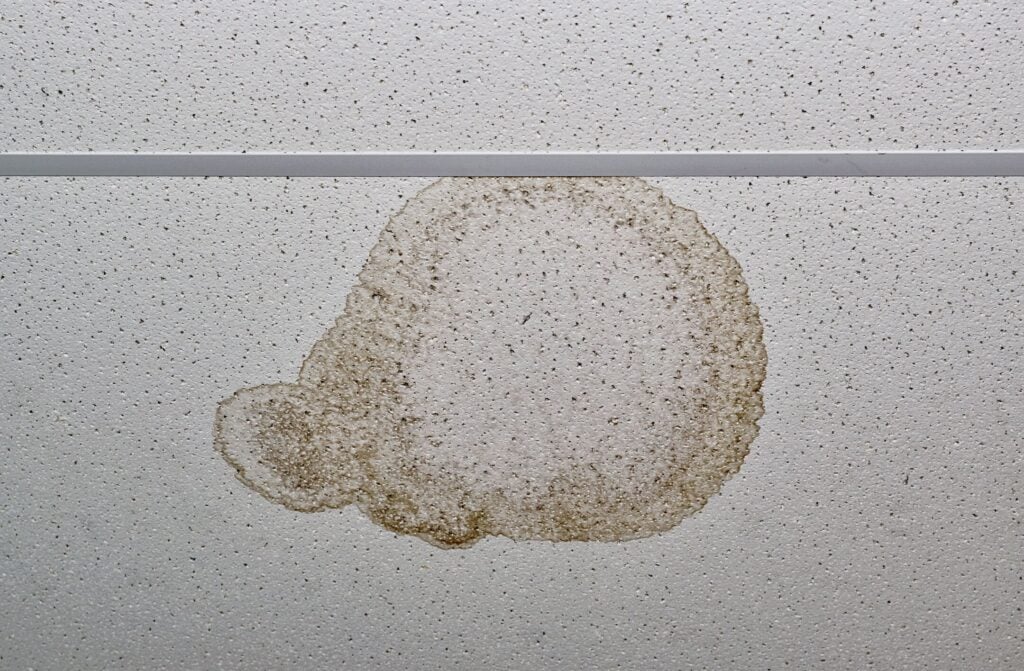
Catching a leak early can keep a roof repair from becoming a remediation project. Watch for these signals after fall rain.
- Ceiling stains: Discoloration, bubbling paint, or sagging tiles often mean water has already traveled above the ceiling.
- Musty odors: A persistent damp smell, especially near exterior walls or upper floors, can point to hidden moisture.
- Visible mold spots: Dark or fuzzy patches near vents, corners, or ceilings suggest moisture has been present for some time.
- Tenant complaints: Reports of stuffy air or recurring allergy symptoms in one area can be an early sign of an underlying leak.
- Wet insulation: Damp or compressed insulation found during a roof inspection confirms water has entered the system.
How Roof Condition Affects Mold Risk
Not every roof carries the same level of risk. The condition of the system, its drainage, and its maintenance history all influence how likely fall rain is to cause a moisture problem.
| Roof Condition | How Moisture Builds | Relative Mold Risk |
| Well maintained, clear drainage | Little water gets past the membrane | Low |
| Clogged drains with ponding | Standing water finds seams and penetrations | Moderate to high |
| Cracked flashing or sealants | Rain enters at penetrations and edges | High |
| Aging membrane with open seams | Water reaches insulation and decking | High |
| Saturated insulation already present | Moisture is trapped and dries slowly | Very high |
Common FAQs About Fall Rain and Commercial Mold
Property managers dealing with autumn leaks tend to ask the same questions. Here are the ones we hear most often.
Why is mold risk higher in the fall?
Fall combines frequent rain, cooler temperatures that slow drying, and debris that clogs drainage. Together those conditions keep roofing materials and insulation wet for longer, which gives mold a better chance to grow.
Can a roof leak cause mold in a commercial building?
Yes. Water entering through a roof can saturate insulation and drywall, and mold can begin growing on damp materials within two to three days if they are not dried. A roof leak is one of the most common hidden sources of building mold.
Is mold remediation enough if the roof is still leaking?
No. Mold removal addresses existing contamination, but removing mold without correcting the leak invites it to return. Fixing the roof source is essential to making the cleanup last.
How often should a commercial roof be inspected before and after fall rain?

Twice a year is a common recommendation, once before the rainy season and once after. An extra inspection after any major storm helps catch leaks before they spread.
Does insurance cover mold from a roof leak?
Coverage varies widely, and many policies limit or exclude mold, especially when it results from long term leaks or deferred maintenance. Review your policy and document any sudden storm damage promptly.
Advanced Solutions: Stopping Moisture Before Mold Starts
Mold prevention starts overhead, and a dry roof is the foundation of a healthy building. Advanced Solutions has helped commercial property owners across Texas, Missouri, Kentucky, Tennessee, and Georgia find and repair the roof leaks that feed moisture problems, with veteran led crews who explain what they find and what it will take to fix it.
If fall rain has you worried about leaks or hidden moisture, schedule your roof assessment and let our team pinpoint the weak spots before they turn into a mold problem.