Featured Article
Commercial Roof Repair: Causes and Solutions
A small leak rarely stays small for long, which is why commercial roof repair is one of the most searched topics among property owners managing flat roof and low slope buildings. Most repair projects trace back to a handful of recurring issues, and understanding those issues early can mean the difference between a quick fix and an expensive emergency. Before scheduling a commercial roof repair service, it helps to understand what typically causes roof failures and what solutions actually work, no matter whether your building uses a single-ply membrane or metal roofing.
In this guide, we will cover:
- The most common causes behind commercial roof leaks and damage
- How drainage and ponding water lead to repeated repair calls
- Practical solutions for the most frequent roofing problems
- A comparison of repair versus replacement decisions
- Common questions property owners ask before scheduling repairs
Why Commercial Roofs Develop Problems Over Time
Commercial roofs, particularly flat and low slope systems, do not shed water the way steep slope residential roofs do. Instead, water has to be moved off the roof through a network of drains, scuppers, and slight slopes built into the structure. TPO roofing membranes are popular for low-slope roofing because of their balance of cost and performance, but like any commercial roofing product, they still depend on proper drainage to perform well over time. When any part of that system fails, even slightly, water finds the weakest point and works its way in, which is why working with an experienced roofing company matters as much as the materials themselves.
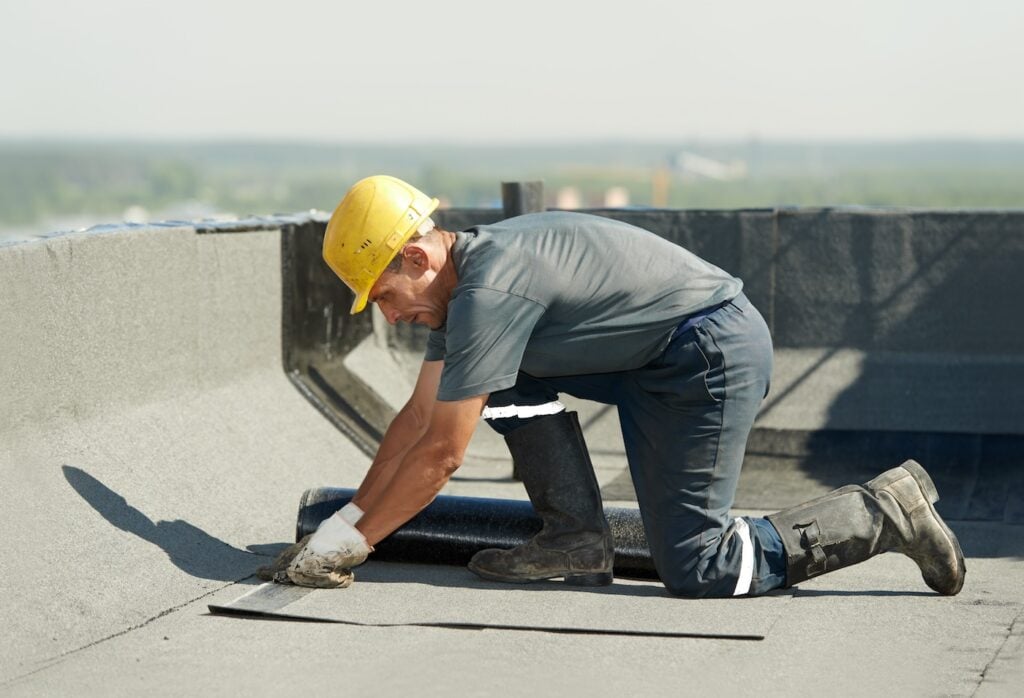
Properties across Memphis, Tennessee and the surrounding region deal with heavy rainfall, summer humidity, and the occasional severe storm, all of which place extra demand on drainage systems and roofing materials. We’re proud to serve home and business owners in Memphis, Tennessee and nearby communities with commercial roofing services and more.
How Small Issues Turn Into Major Repairs
Most commercial roof leaks do not start as major failures. A small seam separation, a weakened flashing detail, or a clogged drain that allows water to pool are common starting points. Left unaddressed, these minor issues allow water intrusion that gradually damages insulation, decking, and interior finishes, turning a modest repair into a much larger project.
8 Common Causes of Commercial Roof Repair
Most repair calls trace back to one or more of these recurring issues. Recognizing them early is the fastest way to keep repair costs manageable.
1. Ponding Water
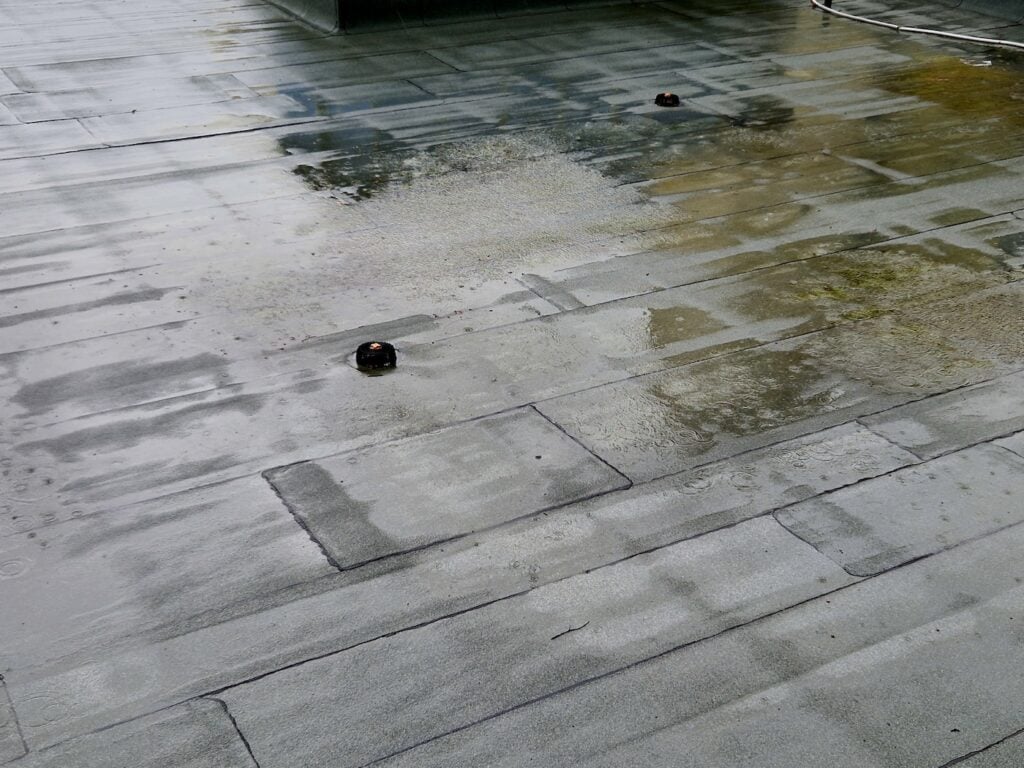
Water that remains on a flat or low slope roof for more than 48 hours after rainfall is considered ponding water, and it is one of the most common triggers for repair calls. Over time, standing water accelerates membrane breakdown, adds significant weight to the roof deck, and creates ideal conditions for algae growth.
- Membrane stress: Prolonged exposure to standing water weakens the membrane faster than normal weathering alone.
- Structural load: Ponding water adds substantial weight that the roof deck was not necessarily designed to carry long-term.
- Algae and biological growth: Standing water creates conditions where algae and mold can take hold and spread across the membrane surface.
2. Flashing Failure
Flashing seals the transition points where the roof meets vents, HVAC units, and parapet walls, and it is one of the most vulnerable components on any commercial roof. As flashing ages, it can loosen, crack, or pull away from the surrounding surface, creating a direct path for water to enter the building.
- Thermal movement: Repeated expansion and contraction from temperature swings gradually loosens flashing seals.
- Sealant breakdown: UV exposure dries out the sealants that keep flashing watertight, leading to gaps over time.
- Penetration vulnerability: Every vent, pipe, and HVAC unit represents a potential entry point if flashing is not properly maintained.
3. Membrane Punctures
Foot traffic from maintenance crews, dropped tools, and storm debris are among the most common causes of membrane punctures. Even a small puncture can allow water to seep beneath the surface and spread unnoticed for months before it shows up as an interior leak.
- Routine maintenance traffic: Frequent walking across the same paths can wear down the membrane over time.
- Dropped equipment: Tools or hardware left on the roof during service calls can puncture the surface if not removed.
- Storm debris impact: Branches, hail, and wind-blown debris can tear or puncture membranes during severe weather.
4. Clogged Drains and Scuppers
Drains and scuppers are designed to move water off the roof quickly, but they only work if they stay clear. When leaves, dirt, or construction debris build up, water has nowhere to go and begins to pool in the surrounding area.
- Seasonal debris buildup: Falling leaves and wind-blown dirt are the most common culprits behind clogged drainage points.
- Reduced flow capacity: Partial blockages slow drainage even before a drain becomes fully clogged.
- Increased ponding risk: Clogged drainage is one of the most direct paths to chronic ponding water issues.
5. Deteriorated Sealants
Sealants are used around almost every penetration on a commercial roof, including HVAC units, pipes, and skylights. Constant UV exposure and temperature fluctuations cause these sealants to dry out, crack, and shrink, eventually opening small gaps that let water through.
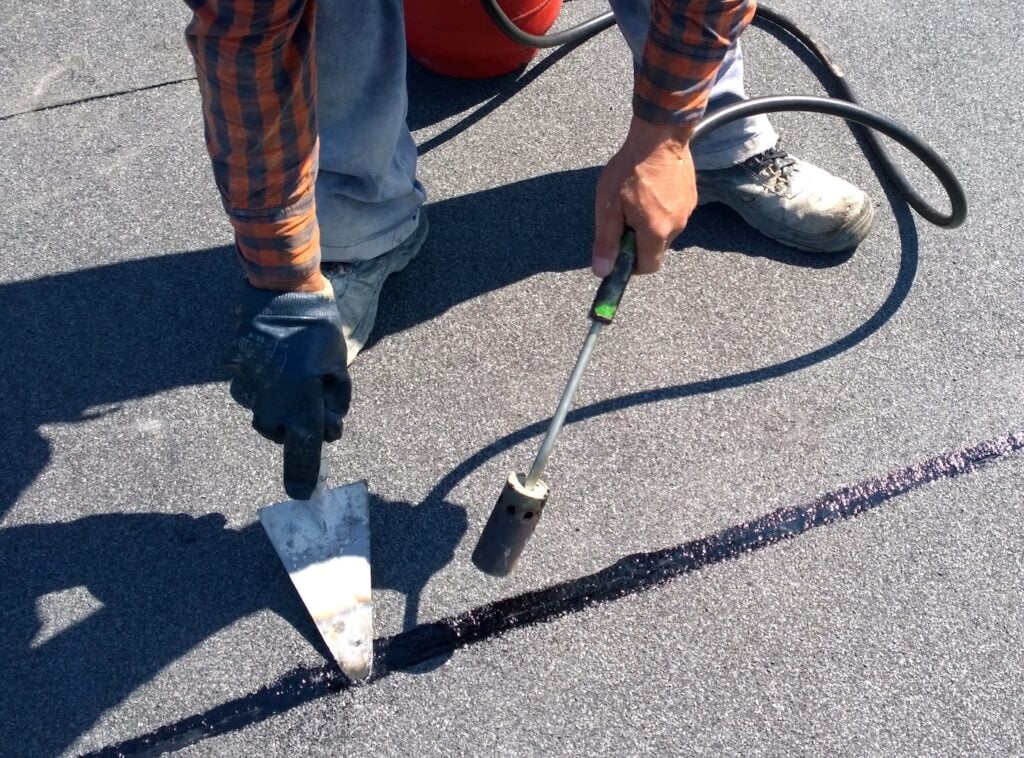
- UV degradation: Direct sun exposure breaks down sealant flexibility faster than most other roof components.
- Temperature cycling: Repeated heating and cooling causes sealants to expand and contract until they crack.
- Hidden leak points: Sealant failures are often discovered only after water has already entered the building.
6. Poor Installation
Not every roofing problem develops over time. Some issues, like improperly sealed seams or joints, trace directly back to the original installation and may not surface as leaks for years after the roof is completed.
- Inadequate seam sealing: Seams that were not fully welded or bonded during installation are prone to gradual separation.
- Incorrect flashing details: Flashing installed without following manufacturer specifications often fails earlier than expected.
- Skipped inspections: Roofs installed without proper quality checks are more likely to have hidden defects that surface later.
7. Storm Damage
High winds, hail, and heavy rain can compromise even a well-maintained roof, particularly around edges, corners, and penetrations where wind pressure concentrates. Storm damage is often the most sudden and visible cause of commercial roof repair needs.
- Wind uplift: High winds can lift membrane edges or loosen fasteners, especially on older roofing systems.
- Hail impact: Hail can bruise or puncture membranes, with damage that is not always visible from the ground.
- Heavy rain infiltration: Intense rainfall can overwhelm drainage systems faster than they were designed to handle.
8. Roof Age
As roofing materials approach the end of their rated service life, they naturally lose flexibility and become more prone to cracking, shrinking, and splitting. An aging roof is more vulnerable to nearly every other cause on this list, which is why age alone is worth factoring into any repair decision.
- Reduced flexibility: Older membranes become brittle and are more likely to crack under stress.
- Compounding issues: Aging roofs often experience multiple problems at once, making isolated repairs less effective.
- Diminishing returns on repair: At a certain point, continued repairs on an aging roof cost more than planning for replacement.
Practical Solutions for the Most Common Problems
Most of the issues above respond well to targeted repairs when caught early. The key is matching the right solution to the specific problem rather than applying a one size fits all fix, and a structured process for commercial roof repair includes inspection, assessment, and final quality checks to confirm the work actually solved the underlying issue.
- Addressing ponding water: Adding drains, tapered insulation, or crickets can redirect water and eliminate chronic pooling areas.
- Restoring flashing and sealants: Replacing damaged flashing and resealing penetrations closes off the most common entry points for water.
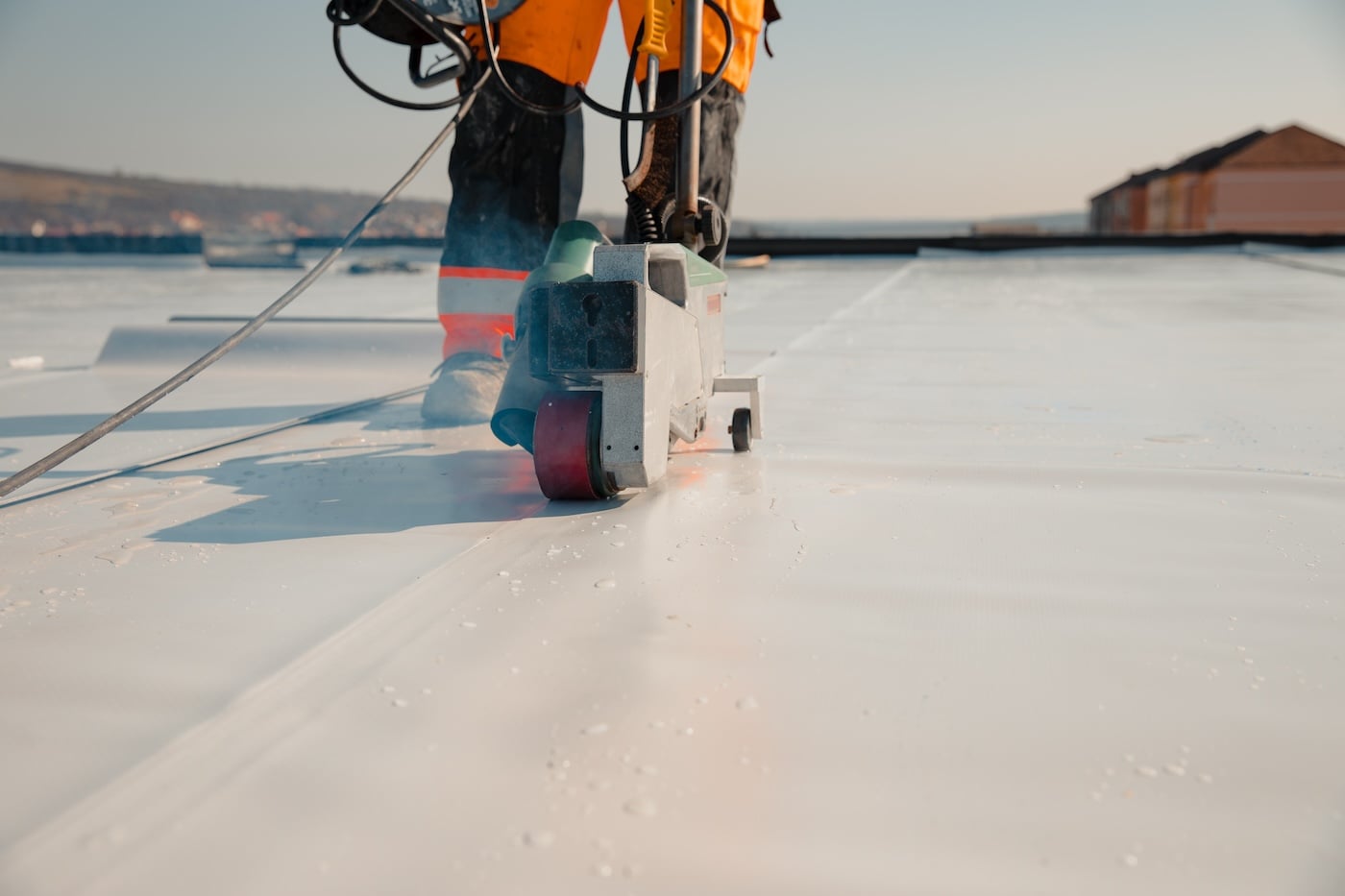
- Patching membrane punctures: Small punctures can often be welded or patched without disturbing the surrounding membrane.
- Improving drainage maintenance: Scheduling regular debris removal from drains and scuppers prevents many leaks before they start.
- Applying a roof coating: Roof coatings can extend the service life of roofs by sealing minor surface imperfections while restoring reflectivity. Acrylic coatings in particular protect against weathering and UV damage, making them a practical option for roofs that are sound but showing signs of age.
A preventative maintenance plan that combines regular inspections with prompt minor repairs is one of the most effective ways to avoid emergency calls altogether, while also supporting better energy efficiency by keeping reflective roofing products performing as designed.
Repair vs. Replacement: How to Decide
Not every roof problem calls for a full replacement. The right decision depends on the roof’s age, the extent of the damage, and whether the underlying insulation and decking remain dry. Most commercial roofs last 20 to 30 years depending on the material and climate, and regular maintenance can extend a roof’s lifespan beyond 30 years in many cases, which is why ongoing preventative maintenance is often the most cost-effective roofing decision a property owner can make.
| Factor | Favors Repair | Favors Replacement |
| Roof Age | Under 15 years | Near or past rated lifespan |
| Damage Extent | Isolated, localized issues | Widespread membrane failure |
| Insulation Condition | Dry, intact | Saturated or compromised |
| Repair History | Infrequent | Recurring repairs in the same areas |
Common FAQs About Commercial Roof Repair
Property owners dealing with roof issues tend to ask similar questions before scheduling a repair. Here are the ones we hear most often.
How do I know if my roof needs repair or full replacement?
Isolated leaks on a roof that is otherwise in good condition usually call for repair, while widespread damage, saturated insulation, or a roof nearing the end of its rated lifespan often points toward replacement.
How quickly should a roof leak be repaired?
As soon as possible. Even a small leak can damage insulation, ceilings, and interior finishes, and the cost of repair tends to grow the longer water intrusion continues.
Can ponding water be fixed without a full roof replacement?
In many cases, yes. Adding drains, tapered insulation, or crickets can resolve ponding issues without requiring a complete tear off and replacement.
Does insurance typically cover commercial roof repairs?
It depends on the cause of the damage. Storm related damage is often covered, while damage from age or lack of maintenance typically is not. A documented inspection helps support any claim that is filed.
How often should a commercial roof be inspected to avoid repairs?
Most industry guidance recommends inspections twice a year, in spring and fall, along with additional inspections after any major storm event.
Advanced Solutions: Fast, Honest Commercial Roof Repair
Catching roofing problems early is the single best way to control repair costs and avoid disruption to daily operations. Our team has helped property owners across Texas, Missouri, Kentucky, Tennessee, and Georgia identify and resolve roofing issues quickly, always with clear communication about what is actually needed and why, whether that means a targeted repair, a roof coating, or a full roof installation using the latest commercial roofing products.
Whether you are dealing with a recurring leak, storm damage, or simply want a professional opinion on your roof’s condition, Advanced Solutions brings decades of combined industry experience to every inspection and repair we perform.
Dealing with a roof leak or recurring repair issue? Get your free roof inspection and find out exactly what your roofing needs are.