Featured Article
Emergency Commercial Roof Repair: When to Act
A roof leak that starts during a storm rarely stays manageable if it is left alone. Emergency commercial roof repair is not a situation where waiting to see what happens works in a property owner’s favor, and every hour of delay creates compounding risk to the building, its contents, and the people inside. When an urgent roofing situation is unfolding, knowing how to get commercial storm damage under control quickly can make a real difference in what the final repair bill looks like.
In this guide, we will cover:
- The warning signs that a commercial roof situation has become an emergency
- The most common causes behind urgent repair calls
- What to do in the first hours after a roof emergency is discovered
- How emergency repairs differ from standard repair work
- Common questions property owners ask when they are in the middle of a roofing crisis
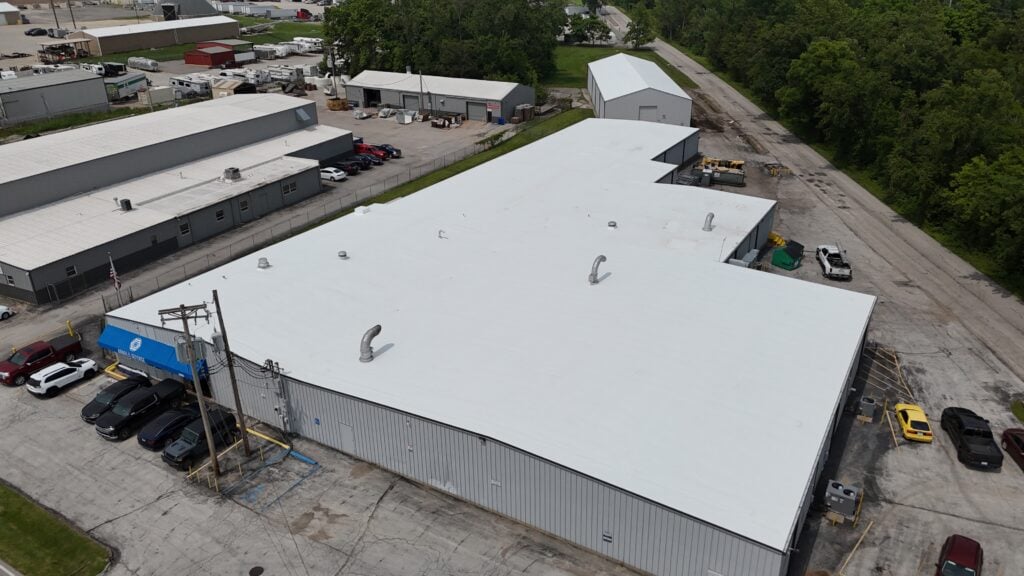
Why Speed Matters in a Commercial Roof Emergency
The difference between a repair and a replacement often comes down to how quickly a breach is addressed. Water that enters through a compromised roof does not stop at the membrane. It moves through insulation, soaks into decking, and reaches interior finishes, electrical systems, and stored inventory in a matter of hours depending on the severity of the breach.
According to FEMA, mold and mildew can start growing within 24 hours after water exposure and can spread throughout a building if moisture is not controlled quickly, which means a roof breach that goes unaddressed overnight can create a secondary remediation problem that costs far more to resolve than the original roofing damage.
Properties across Louisville, Kentucky and the surrounding region deal with heavy spring storms, sudden hail events, and winter ice accumulation that can push a struggling roof past its limits in a single weather event. We’re proud to serve home and business owners in Louisville, Kentucky and nearby communities with emergency commercial roofing services and more.
The Compounding Cost of Delayed Action
A small roof breach rarely stays small. Water that saturates insulation reduces its R-value and can require full insulation replacement, not just membrane repair. Decking that absorbs moisture softens and can require section replacement before any new roofing material can be properly installed above it. Acting within the first few hours after a breach is discovered consistently reduces total repair costs and protects the building from secondary damage.
7 Situations That Require Emergency Commercial Roof Repair
Not every roofing problem is an emergency, but these seven situations call for immediate action rather than a scheduled appointment.
1. Active Water Intrusion During or After a Storm
Water actively entering the building through the roof is the clearest signal that emergency repair is needed. Whether it is coming through a puncture, a failed seam, or a compromised flashing, active water intrusion means the primary line of defense has been breached.
- Immediate priority: Protect interior assets with tarps or containers and document the entry point with photos before any cleanup begins.
- What comes next: A qualified roofing crew should perform emergency tarping or a temporary patch to stop the water until a permanent repair can be scheduled.
2. Storm Damage That Exposes the Roof Deck
Hurricanes, tornadoes, and straight-line wind events can physically remove membrane sections, shingles, or metal panels, leaving the roof deck directly exposed to weather.
- Immediate priority: Exposed decking deteriorates quickly once wet, so getting a temporary cover over the opening is the most time-sensitive task following any major storm.
- What comes next: A full damage assessment should be completed before permanent repairs begin, both for the repair plan and to support any insurance claim.
3. Structural Sagging or Visible Deflection
A roof that is visibly sagging or deflecting downward has moved beyond a surface issue and into structural territory. This can result from accumulated water weight, deteriorated decking, or compromised structural members beneath the membrane.
- Immediate priority: Clear the area below the sagging section and restrict access to that part of the building until a structural assessment is completed.
- What comes next: Do not attempt to drain pooled water from a structurally compromised roof without professional guidance, as rapid load removal can cause sudden failure.
4. Interior Ceiling Collapse or Severe Water Staining
A ceiling that has collapsed or is showing severe staining and bubbling paint indicates that significant water has already accumulated above the finished ceiling surface.
- Immediate priority: Address the safety risk to building occupants first, then identify and document the source of water above.
- What comes next: The roofing source of the intrusion needs to be located and sealed before interior repairs begin, or the interior work will simply be damaged again.
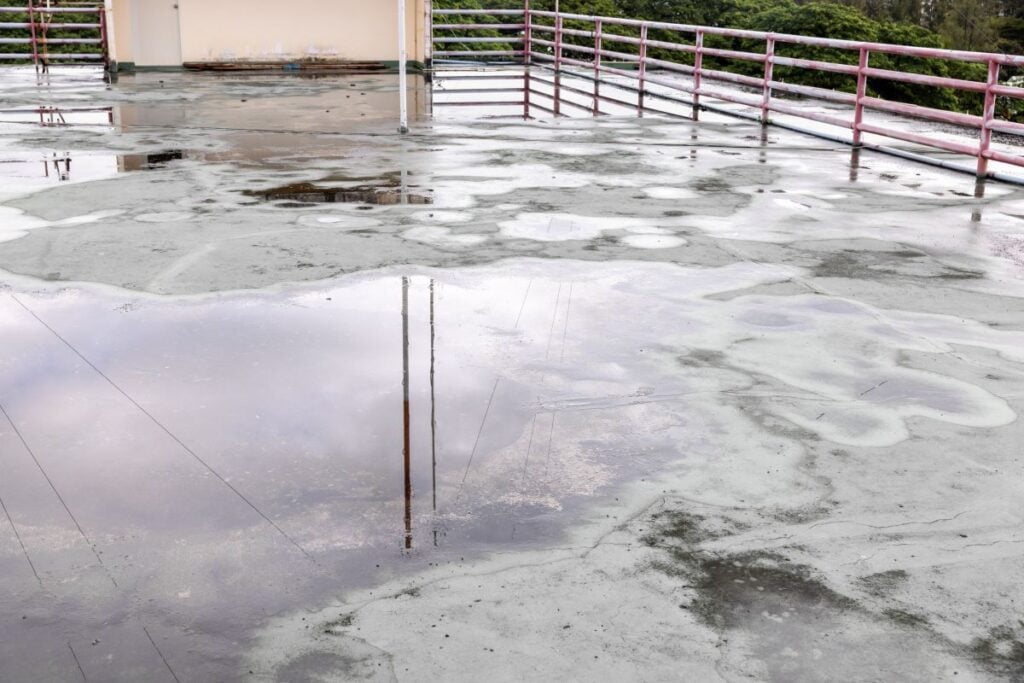
5. Flash Flooding That Overwhelms Drainage
Heavy rainfall that exceeds the capacity of the roof’s drainage system can force water through low-lying seams, penetrations, and edge details that would otherwise hold up fine under normal conditions.
- Immediate priority: Once the storm passes, check drain outlets and scuppers for blockages and document any water that entered the building.
- What comes next: Drainage improvements such as additional drains or clearing existing blockages may be part of the permanent repair solution.
6. Hail Damage That Creates Immediate Leak Points
While some hail damage is gradual, large hailstones can puncture single-ply membranes, crack aged modified bitumen, and create immediate breach points that leak with the very storm that caused them.
- Immediate priority: After the storm, walk the roof or use a drone inspection to identify punctures or cracks before the next rain event.
- What comes next: Temporary patch materials can close acute punctures while a full hail damage assessment is completed for insurance documentation.
7. Failed Emergency Repairs From a Prior Storm
A temporary patch that has failed, or a repair made quickly that did not hold, creates a new emergency situation when the next storm arrives. Improperly secured tarps and single-layer patches are common sources of secondary leaks.
- Immediate priority: Identify why the previous repair failed before applying any additional temporary solutions.
- What comes next: A permanent repair using appropriate materials and methods should be scheduled as quickly as possible to avoid further interior damage.
What to Do in the First Hours
The actions taken in the first few hours after a roof emergency is discovered have a significant impact on total damage and repair cost.
- Document everything immediately: Photograph and video the breach point, interior damage, and any standing water before cleanup begins; this documentation is critical for insurance claims.
- Protect interior assets: Move inventory, equipment, and sensitive materials away from active leak areas and use containment to limit water spread.
- Call a qualified roofing contractor: Temporary repairs performed by untrained crews can create additional damage and may complicate insurance claims if done improperly.
- Notify your insurance carrier: Report the damage promptly and confirm coverage terms before authorizing repair work beyond emergency stabilization.
Emergency Repair vs. Permanent Repair
Emergency repair work is not a substitute for a permanent fix. Tarps, temporary patches, and emergency sealants are designed to stop immediate water intrusion and protect the building while conditions allow for proper permanent repair.
| Action | Purpose | Timeframe |
| Emergency tarping | Stop active water entry | Same day |
| Temporary membrane patch | Seal acute breach point | 24 to 48 hours |
| Permanent roof repair | Restore full waterproofing | As soon as conditions allow |
| Full inspection and documentation | Support insurance claim and plan repair | Within 24 to 72 hours of damage |
Common FAQs About Emergency Commercial Roof Repair
Property owners dealing with an urgent roofing situation tend to ask the same questions in the middle of a crisis. Here are the ones we hear most often.
How do I know if my situation is a true roofing emergency?
Active water entering the building, visible structural deflection, or storm damage that has exposed the roof deck are all situations that require emergency response. When in doubt, call a contractor for an immediate assessment rather than waiting.
Does my insurance cover emergency roof repairs?
Most commercial property policies cover sudden storm damage to the roof and resulting interior damage. Coverage for emergency tarping and temporary repairs is typically included, but you should notify your carrier as soon as possible and document everything before work begins.
Can emergency repairs be done at night or on weekends?
A qualified commercial roofing contractor should offer emergency response outside of standard business hours for situations involving active water intrusion or exposed decking. Delays waiting for business hours can significantly increase total damage.
How long can a temporary roof patch hold?
That depends heavily on weather conditions and how the patch was applied. Most temporary patches are designed to hold for days to a few weeks, not months. Scheduling a permanent repair should happen as soon as conditions and scheduling allow.
What is the risk of waiting even a day before calling for emergency repair?
Water that enters a commercial building can reach insulation, decking, and interior finishes within hours. Mold growth can begin within 24 hours of sustained moisture exposure, which can add remediation costs on top of the original repair expense.
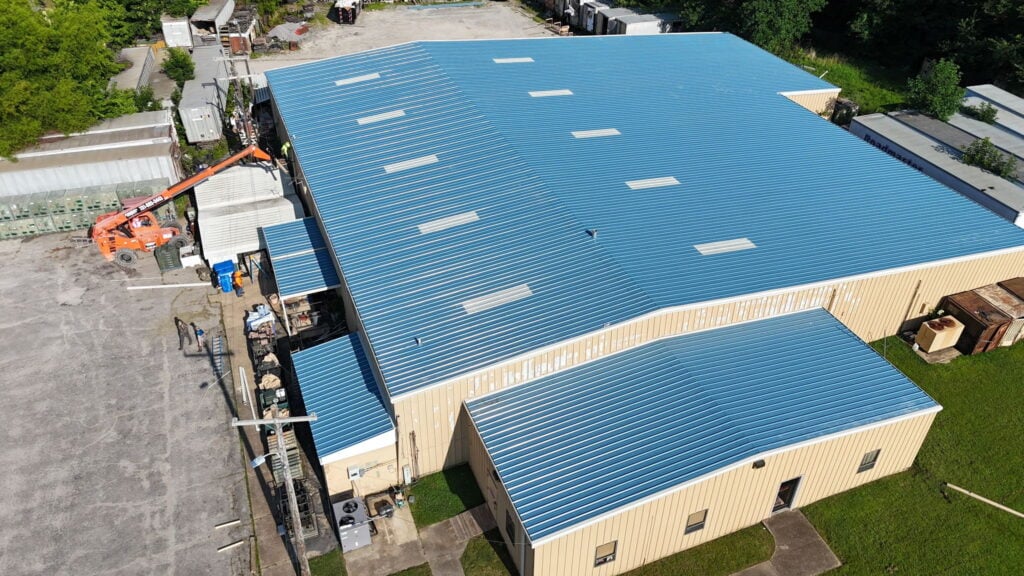
Advanced Solutions: Emergency Roofing Response You Can Count On
A roofing emergency does not wait for business hours, and neither do we. Advanced Solutions has helped property owners across Texas, Missouri, Kentucky, Tennessee, and Georgia respond to storm damage, sudden leaks, and structural roof failures quickly, with experienced crews who know how to stabilize a building and lay the groundwork for a proper permanent repair.
When a roofing emergency is happening now, contact our team immediately and let us get to work protecting your building and your investment.