Featured Article
Storm Damage Restoration: A Commercial Property Owner’s 2026 Guide
When severe weather hits a commercial building, the hours that follow often shape the final repair bill more than the storm itself. Storm damage restoration is the structured process of stabilizing, documenting, repairing, and rebuilding a property after wind, hail, or water intrusion has compromised it, and owners who understand the restoration process make better decisions under pressure. This 2026 guide walks through each stage and explains how a dedicated storm damage restoration team supports you from the first call to the final walkthrough, including emergency roof repair, insurance claim support, and permanent restoration.
In this guide, we will cover:
- Why the first 72 hours after a storm matter so much
- The types of storm damage commercial roofs face most often
- The five phases of a well run restoration project
- What to gather before a restoration crew arrives
- How temporary fixes differ from permanent repairs
- Answers to the questions property owners ask most
Why the First 72 Hours Shape Everything
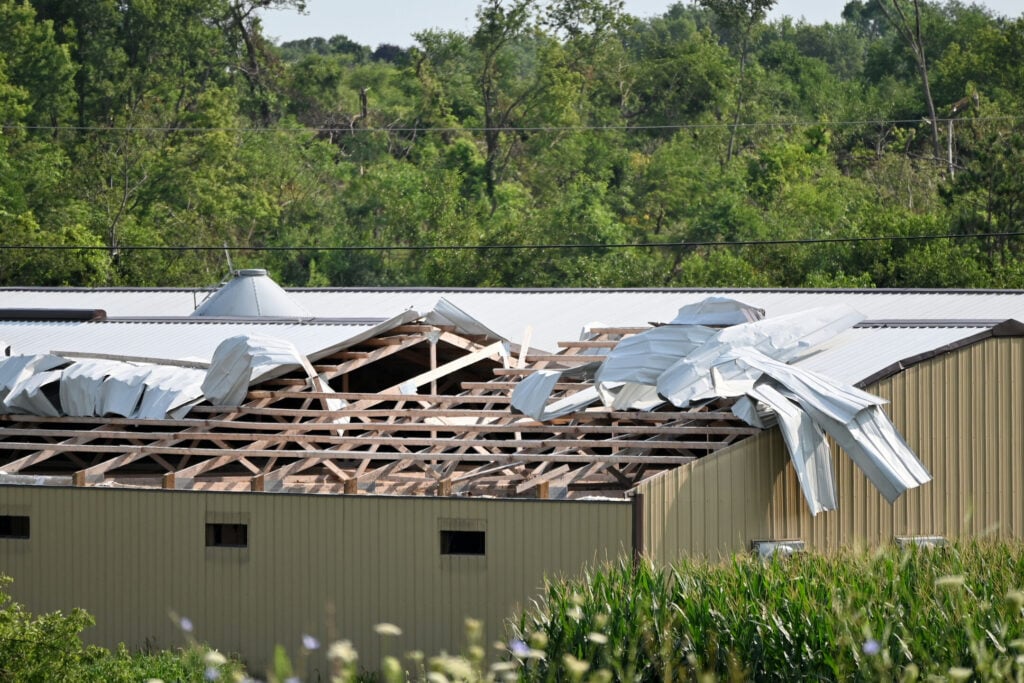
Water, wind, and debris keep working on a damaged building long after a severe storm has passed. A small breach in a membrane can saturate insulation overnight, and a lifted flashing can turn into an interior leak with the next light rain. Owners who act quickly keep a repairable problem from becoming a full roof replacement.
Speed has to be balanced with safety. OSHA’s Hurricane eMatrix guidance reports that fall protection concerns were found at more than three quarters of the work sites it observed during post storm roof inspection, tarping, and repair, which is a strong reason to leave rooftop work to trained crews rather than staff or tenants.
Buildings across St. Louis, MO, deal with hot humid summers, fast moving spring storms, and hard winter freezes, so a roof that survives one season of stress can be quietly weakened for the next. We’re proud to serve home and business owners in St. Louis, MO, and nearby communities with storm damage restoration and more.
How Delay Multiplies Cost
Severe storm damage that goes unaddressed rarely stays contained to the roof. Moisture moves into insulation, decking, ceiling tiles, and electrical pathways, standing water adds weight and strain to flat roof sections, and every added day of exposure widens the scope of work. Interior finishes, stored inventory, and tenant operations can all be affected, which adds business interruption costs on top of the roofing repair itself. Early stabilization is almost always less expensive than the secondary damage it prevents, and it also strengthens the insurance claim by showing the owner acted responsibly once the damage was discovered.
Types of Storm Damage Commercial Roofs Face
Not every storm leaves the same signature, and the type of damage determines the repair approach. Wind and hail damage are the most common culprits, but they are far from the only ones. Recognizing what you are looking at helps you describe the problem accurately to your contractor and your insurance carrier.
- Hail damage: Impact from hailstones can bruise shingles, puncture single ply membranes, dent metal panels, and strip protective granules, often without an obvious leak at first.
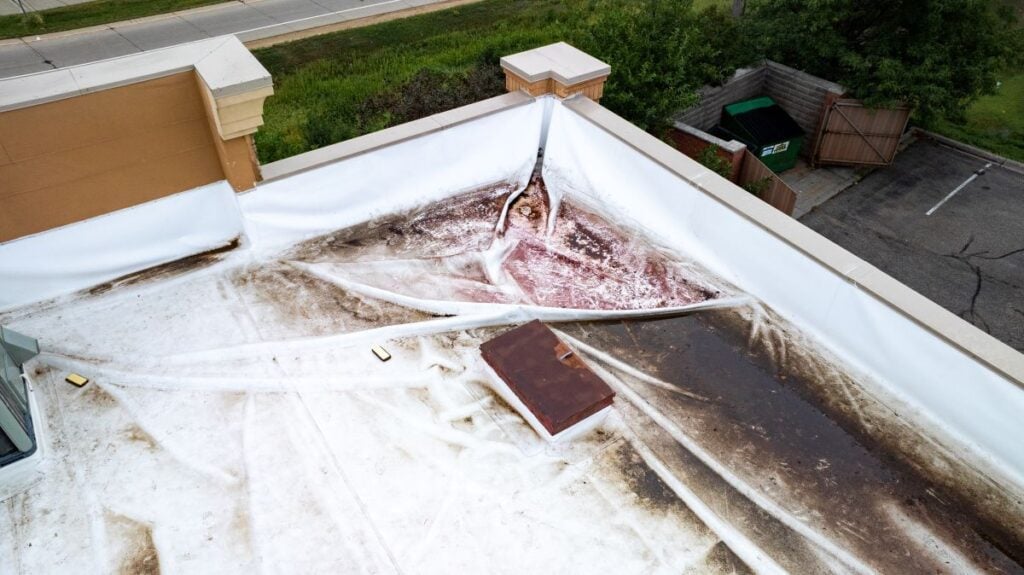
- Wind damage: Strong gusts lift membrane edges, separate seams, tear off shingles, and displace flashing, particularly at corners and along the roof perimeter.
- Water intrusion: Heavy rain and flash flooding exploit weak seams, clogged drains, and failed sealants, leaving standing water on the roof and saturating insulation and decking below the surface.
- Debris impact: Fallen branches and wind driven objects can puncture roofing materials and crush rooftop equipment, creating open breaches.
- Winter storm damage: Winter storms and early freezes can crack aging membranes and push meltwater beneath loosened roofing components, and the damage often shows up only after the first thaw.
5 Phases of Storm Damage Restoration
A well run project follows a predictable order. Knowing the phases helps you ask the right questions and spot a contractor who skips steps.
1. Safety Assessment and Hazard Control
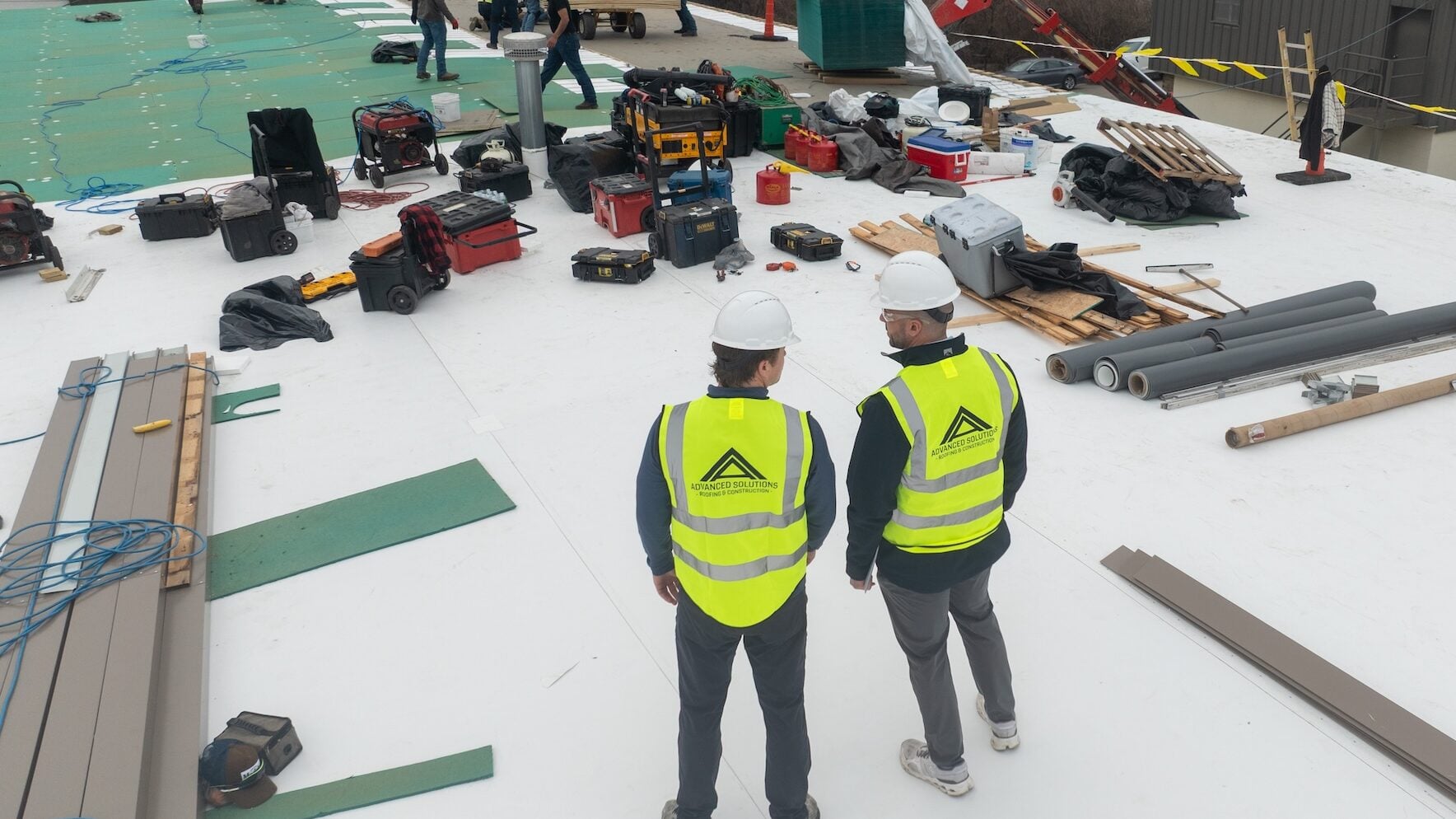
Before any repair begins, the crew evaluates the roof, the structure, and the surrounding area for hazards. Weakened decking, downed power lines, and loose debris can make a damaged roof unsafe to walk, so this step protects both workers and building occupants.
- Structural check: Crews confirm the roof deck can support workers and equipment before anyone steps onto it.
- Hazard marking: Unsafe zones, including areas near broken windows and fallen materials, are identified and restricted so tenants and staff stay clear during the work.
2. Emergency Stabilization
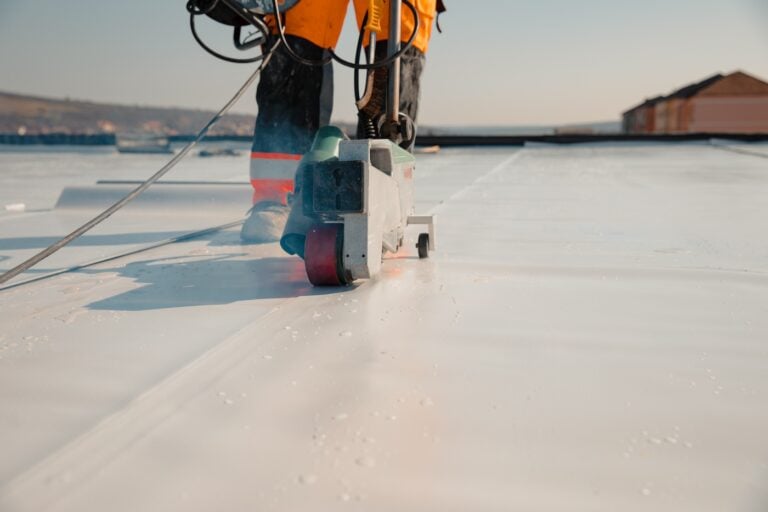
Once the area is safe, the priority is stopping further water entry. Tarping, temporary patches, and board ups protect the interior while the full scope of damage is determined, which keeps a bad situation from getting worse.
- Temporary coverings: Properly secured tarps and membrane patches keep water out until permanent materials can be installed.
- Moisture containment: Wet areas are identified early so structural drying, and flood damage restoration where water reaches the interior, can begin without delay.
- Debris removal: Fallen branches and loose roofing materials are cleared from the roof and grounds so crews can reach damaged areas safely.
3. Damage Documentation and Claim Support
Thorough documentation turns a storm event into a claim an insurer can evaluate fairly. Photos, measurements, and written findings connect each area of damage to the storm that caused it, which matters because adjusters often question whether damage came from the storm or from age.
- Detailed reporting: Written inspection reports separate storm damage from age related wear, which is a common point of dispute.
- Adjuster coordination: A contractor present during the adjuster visit helps make sure no damaged areas are overlooked.
4. Permanent Repair or Replacement
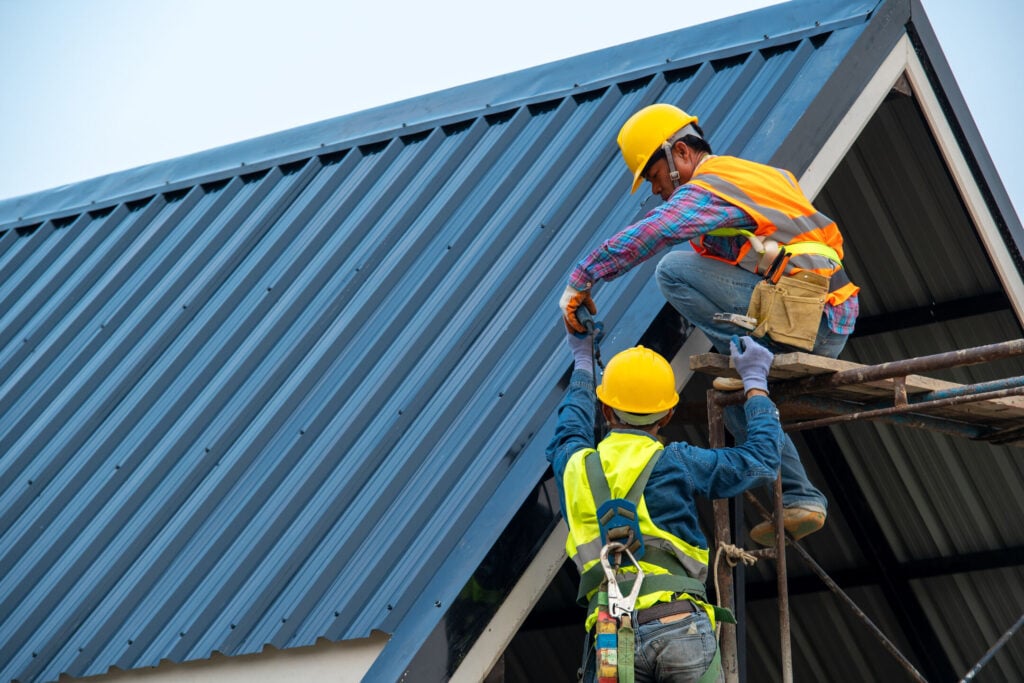
With the scope confirmed, the crew restores the roof to full performance. Isolated damage can often be repaired, while widespread failure may point toward replacement of the membrane, shingles, or metal panels.
- Matched materials: Repairs use products compatible with the existing system so new work does not compromise the old.
- Manufacturer standards: Installation follows the guidelines required to keep warranty coverage in place.
5. Final Inspection and Preventive Planning
The project closes with a walkthrough, documentation of completed work, and a plan to protect the building going forward. This step is where small vulnerabilities get caught before the next storm finds them.
- Quality verification: Seams, flashings, and penetrations are checked one last time before the job is signed off.
- Maintenance schedule: A simple inspection routine, often twice a year, helps extend the life of the restored roof.
What to Gather Before the Restoration Crew Arrives
A little preparation speeds up every phase and gives your contractor what they need to build a strong scope of work. Property managers who have these items ready tend to move through the claim and repair process noticeably faster.
- Policy documents: Keep your declarations page and coverage details handy so deductibles and notification rules are clear.
- Photos and video: Capture exterior and interior damage before any cleanup or temporary repair begins.
- Roof history: Pull installation dates, warranty paperwork, and past inspection or repair records.
- Operations details: Note which tenants, equipment, or inventory sit beneath affected areas so protection can be prioritized.
- Contact list: Gather names and numbers for your insurance agent, property manager, and any tenants who need updates.
Temporary Fixes Versus Permanent Restoration
Emergency measures protect the building, but they are not a substitute for a lasting repair. Understanding the difference helps owners plan timelines and budgets realistically, especially when material availability or weather affects scheduling across the St. Louis area.
| Stage | Purpose | Typical Timing |
| Emergency tarping | Stop active water entry | Same day |
| Temporary patch | Seal a known breach | Within days |
| Full inspection and report | Document scope for repair and claim | Within one to three days |
| Permanent repair or replacement | Restore full waterproofing and performance | As soon as conditions and approvals allow |
Common FAQs About Storm Damage Restoration
Commercial property owners tend to raise the same concerns once storm damage is discovered. These answers cover the questions we hear most often, so you can move forward with confidence.
How soon should I call a restoration contractor after a storm?
As soon as it is safe to do so. Early stabilization limits secondary damage and creates a clear record of when the problem was found and addressed.
Will my insurance cover storm damage restoration?
Sudden storm damage from wind, hail, and heavy rain is commonly covered under commercial property policies, though terms vary by carrier. Prompt notification and thorough documentation give the claim its best chance.
How long does storm damage restoration usually take?
The restoration process often begins the same day with emergency stabilization, while permanent repairs depend on the extent of damage, material availability, and claim approvals. Small repairs may take a few days, and full replacements can take several weeks.
Can I stay open while restoration work is underway?
Often yes. Most roof work can be sequenced to limit disruption, and temporary protection keeps interior spaces usable while permanent repairs are completed.
How do I know whether to repair or replace the roof?
The decision depends on the extent of damage, the age of the system, and whether insulation and decking remain dry. A written inspection report is the most reliable way to answer that for your building.
Should I use the first contractor who knocks on my door after a storm?
Be cautious. Choose a licensed, insured contractor with a documented track record and a clear written scope, rather than one pressuring you to sign quickly.
Advanced Solutions: Restoration Built Around Your Building
A storm does not wait for a convenient moment, and neither should your response. Advanced Solutions has guided property owners across Texas, Missouri, Kentucky, Tennessee, and Georgia through every phase of restoration, with veteran led crews who stabilize the roof, document the damage, and rebuild with materials matched to each building. Our experience across commercial roofing systems means we can handle emergency repairs, claim documentation, and full replacement under one roof.
When storm damage has left your property exposed, book a restoration walkthrough and let our team show you exactly where your roof stands and what it needs next.