Featured Article
When Ponding Water Means Flat Roof Replacement Is Overdue
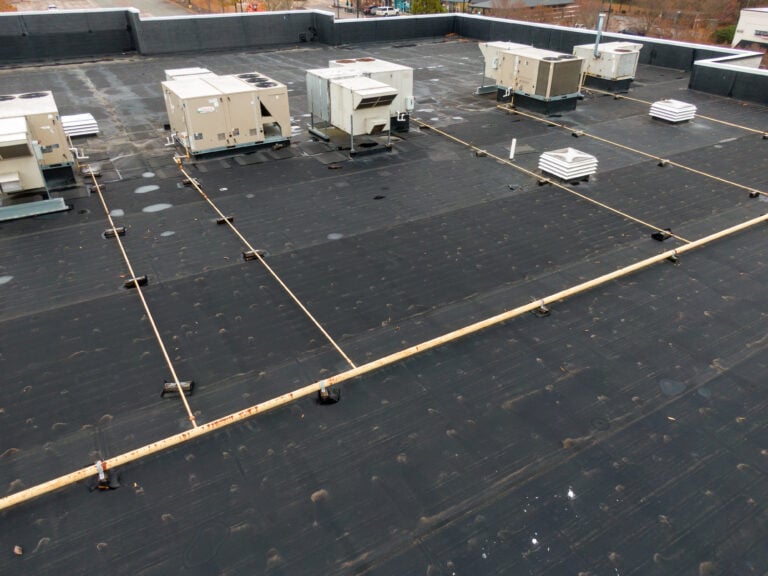
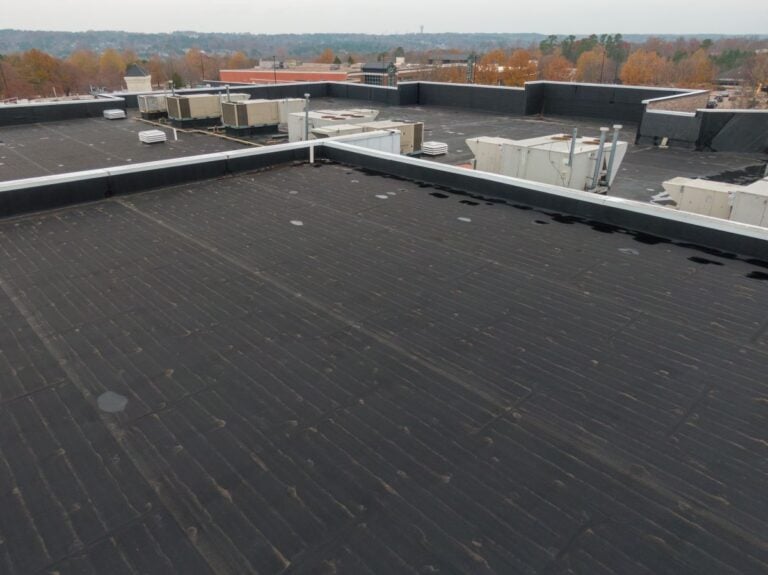
Water that sits on a flat roof for more than 48 hours after rain is not just an inconvenience. It is one of the clearest warning signs the roofing industry uses to identify a system that is failing, and in many cases, it is the first visible symptom of structural and membrane problems that have been building for years. Flat roof replacement decisions often get delayed because there is no active interior leak yet, but ponding water changes the timeline in ways that waiting tends to make worse rather than better. For residential and commercial properties alike, routine flat roof maintenance and flat roof repair can only do so much when the root cause is structural or when the roofing material has degraded past the point of reliable restoration. If your building has standing water on the roof after rain, taking a closer look at commercial flat roof evaluation and replacement options is worth doing sooner rather than later.
In this guide, we will cover:
- Why ponding water is more serious than most property owners realize
- The six conditions that turn ponding from a maintenance issue into a replacement signal
- How to evaluate whether ponding is a drainage problem or a structural one
- What a flat roof replacement process typically involves
- Common questions property owners ask before committing to replacement
Why Ponding Water Is Not a Minor Issue
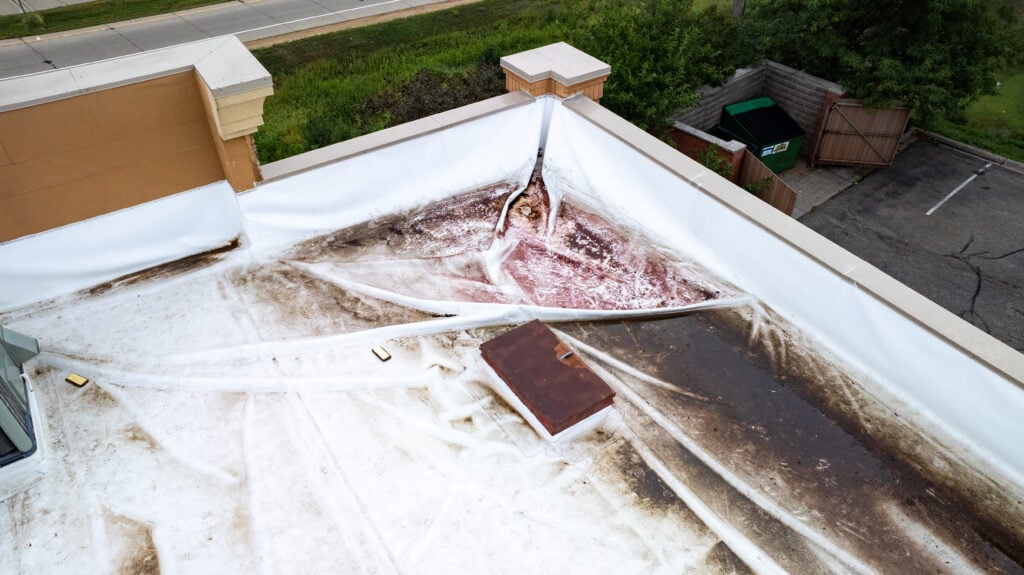
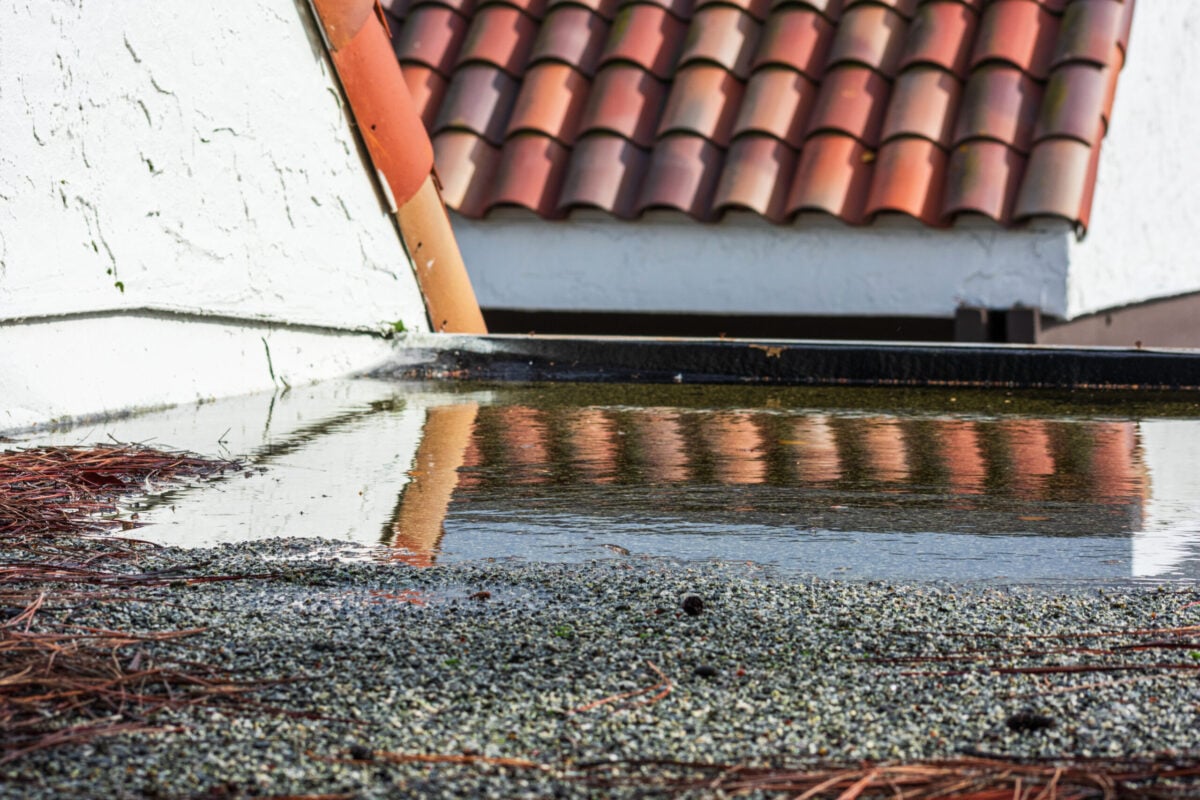
A common misconception about flat roofs is that a little standing water is expected and manageable. Industry guidance defines ponding water as any water that remains on a roof surface more than 48 hours after rainfall has stopped, and the consequences of ignoring it are significant enough that it has been addressed directly in building codes.
The 2024 International Building Code states that roofs that do not have sufficient slope or camber to ensure adequate drainage shall be investigated for ponding instability in accordance with ASCE 7, reflecting the structural risk that accumulated water weight creates on flat roof decking over time.
Properties across the Dallas-Fort Worth area and surrounding region deal with intense rainfall events that can deposit significant water volume on flat commercial roofs in a short period, making drainage performance a critical factor in how these buildings hold up through active storm seasons. We’re proud to serve home and business owners in the DFW area and nearby communities with flat roof evaluation and replacement services and more.
The Weight Problem Nobody Talks About
Water weighs approximately 5.2 pounds per square foot for every inch of depth. A flat roof section that holds three inches of standing water across a 2,000 square foot area is bearing more than 31,000 pounds of unplanned load. That weight stresses the deck, compresses insulation, accelerates membrane deterioration at the water line, and in severe cases can contribute to structural deflection that makes the ponding worse over time. Flat roofing systems on commercial properties were not designed to carry that kind of sustained water weight, and the costly repairs that follow chronic ponding are almost always more expensive than the drainage or replacement work that would have addressed it earlier.
6 Signs Ponding Water Has Crossed Into Replacement Territory
Ponding water alone is not always a replacement trigger. These six conditions, particularly when several are present at once, indicate the roof has moved past what maintenance and repair can reasonably address.
1. Ponding That Has Grown Worse Over Time
If the area of standing water after a rain event has expanded compared to prior years, the roof deck is deflecting under repeated load, and the low spots are getting lower.
- What it signals: Progressive structural deflection means the roof is changing shape under load, which no coating or repair will correct on its own.
- Why replacement becomes necessary: A roof whose drainage geometry is worsening will only accelerate membrane deterioration at the expanding pond margins, making future replacement both more urgent and more expensive.
2. Saturated Insulation Below the Membrane
When ponding water finds its way beneath the membrane, it saturates the insulation layer, which loses nearly all of its thermal value when wet and becomes a source of ongoing moisture damage to the deck below.
- What it signals: Saturated insulation is typically found through infrared scanning or core sampling and indicates that water has been entering the system for an extended period.
- Why replacement becomes necessary: Saturated insulation cannot be dried in place effectively and typically requires full removal before a new roofing system can be installed with any confidence in its performance.
3. Membrane Degradation at Pond Margins
The ring around a chronic ponding area experiences constant wet-dry cycling as water recedes after rain. That cycling accelerates membrane aging at the pond boundary faster than anywhere else on the roof.
- What it signals: Cracking, brittleness, or visible surface degradation concentrated at the edges of low spots indicates the membrane has been stressed repeatedly at those locations.
- Why replacement becomes necessary: Patch repairs at pond margins rarely hold long-term because the underlying cause continues to stress the same area with every rain event.
4. Algae, Biological Growth, or Surface Staining
Chronic ponding creates the sustained moisture environment that algae and biological growth need to establish on a roof surface, which is a visual indicator that standing water is a long-term pattern rather than an occasional occurrence.
- What it signals: Biological growth on a flat roof surface confirms that water has been sitting in that location consistently enough to support a living colony, which typically means months or years of repeated ponding.
- Why replacement becomes necessary: Biological growth degrades membrane surfaces over time and is difficult to fully eradicate without addressing the drainage conditions that created it.
5. Multiple Failed Repair Attempts in the Same Location

When the same area of a flat roof requires repeated repairs, the underlying issue is not being resolved. Ponding water that contributes to recurring leaks in a specific zone is a pattern that points toward systemic membrane failure rather than isolated damage.
- What it signals: A repair history concentrated in areas that also hold standing water typically means the membrane has lost its ability to maintain a watertight surface under the sustained stress of ponding.
- Why replacement becomes necessary: Each additional repair on a chronically ponding area adds cost and delays while the surrounding membrane continues to deteriorate, ultimately making the eventual replacement more extensive.
6. Deck Deflection or Visible Structural Concerns
When ponding water has accumulated enough weight over enough time, visible deflection of the roof deck can develop. This moves the issue from a roofing problem to a structural one requiring evaluation before any new roofing work begins.
- What it signals: Visible sagging rooflines, interior ceiling deflection below affected roof areas, or soft spots identified during a roof walk are indicators of deck stress that goes beyond surface membrane failure.
- Why replacement becomes necessary: A structurally compromised deck must be assessed and repaired before any new membrane system can be installed, and identifying this early prevents more costly emergency intervention later.
Drainage Problem or Structural Problem: How to Tell the Difference
Not every ponding situation requires full replacement. Understanding the root cause determines the right response.
| Cause | Primary Indicator | Typical Solution |
| Clogged drains or scuppers | Ponding clears quickly after drains are cleaned | Drainage maintenance and clearing |
| Inadequate original slope | Consistent low spots that never drain fully | Tapered insulation or added drains under new membrane |
| Deck deflection from age or load | Pond area expanding, sagging visible | Structural assessment then full replacement |
| Saturated insulation | Wet insulation confirmed by core sample or scan | Full tear-off and replacement |
| Membrane failure at pond margin | Cracks or delamination at water line | Replacement of affected membrane sections or full system |
What a Flat Roof Replacement Typically Involves
A flat roof replacement on a commercial building generally follows a consistent sequence regardless of the membrane type being installed.
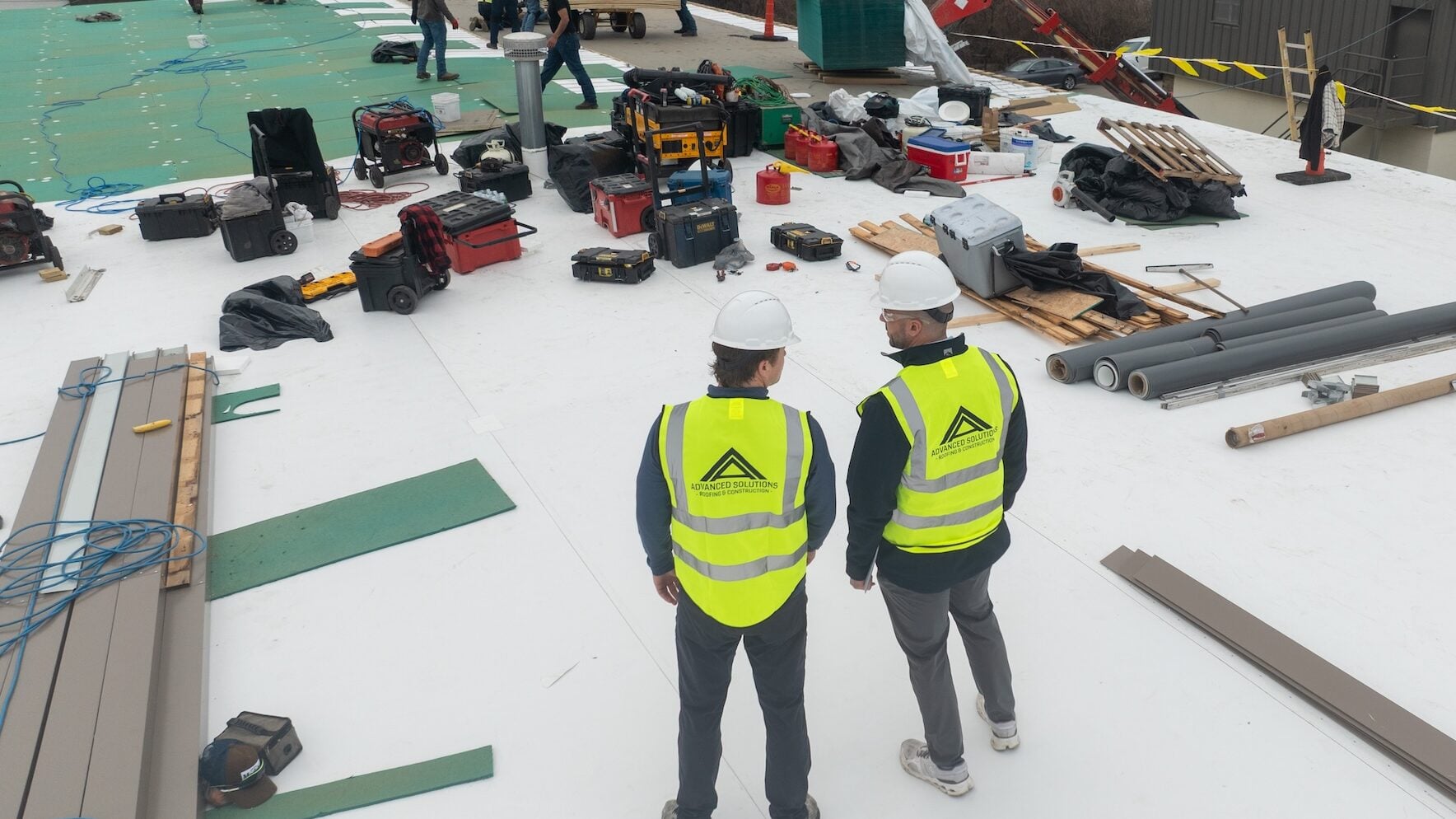
- Tear-off and disposal: The existing membrane, insulation, and any deteriorated components are removed and the deck is exposed for inspection.
- Deck assessment and repair: Any damaged or deflected decking is repaired or replaced before the new system is installed.
- Drainage evaluation: Drain placement, the roof’s slope, and drainage capacity are evaluated and upgraded where needed to avoid costly repairs from recurring on the new system.
- Insulation and membrane installation: New insulation is installed with appropriate tapered sections to improve slope and energy efficiency, followed by the membrane system best suited to the building’s use and climate.
- Inspection and documentation: The completed system is inspected, documented, and submitted for any applicable warranty registration.
Common FAQs About Ponding Water and Flat Roof Replacement
Property owners dealing with persistent ponding tend to ask similar questions before deciding how to proceed. Here are the ones we hear most often.
How long can I wait before addressing ponding water on a flat roof?
The longer ponding continues, the more damage accumulates in the insulation, membrane, and deck. Property owners who address chronic ponding early spend significantly less than those who wait until interior symptoms appear.
Can drainage improvements fix ponding without replacing the roof?
Sometimes. If the cause is blocked drains or inadequate scupper sizing, drainage improvements may resolve the ponding without membrane replacement. If the cause is deck deflection, saturated insulation, or membrane failure, drainage improvements alone will not correct the underlying problem.
Does insurance cover damage caused by ponding water?
It depends on the cause. Sudden storm-related water accumulation may be covered, but chronic ponding related to inadequate maintenance or design is typically excluded. A professional inspection report that documents the cause is essential before filing any claim.
How much does a flat roof replacement cost compared to ongoing repairs?
The ongoing cost of repeated repairs on a chronically ponding roof often approaches or exceeds replacement cost over a five to seven year period, without delivering a lasting solution. A replacement with proper drainage design eliminates the repair cycle entirely.
What is the best flat roofing membrane for buildings with drainage challenges?
An EPDM roof and PVC systems both handle incidental ponding better than acrylic-based systems because of their resistance to prolonged water contact. Rubber roofing in general performs well where minor drainage issues exist, and metal roofing systems with proper slope can eliminate ponding risk entirely on buildings where the structure allows for it. Silicone coatings applied over sound existing membranes are also an option for buildings where minor repairs and a fresh surface are all that is needed before a full replacement becomes necessary.
Advanced Solutions: Flat Roof Replacement Done Right
Ponding water is one of the most reliable indicators that a flat roof is approaching the end of its effective service life, and responding before structural concerns develop consistently produces better outcomes at lower total cost. Advanced Solutions has helped property owners across Texas, Missouri, Kentucky, Tennessee, and Georgia evaluate chronic ponding, determine whether drainage improvements or full replacement is the right call, and deliver flat roof systems built to manage water more effectively than what they replaced.
If your flat roof holds standing water after rain, that is a conversation worth having now rather than after the next storm. Request your flat roof evaluation and find out exactly what your building is dealing with.