Featured Article
Shingle Roof Repair for Commercial Buildings
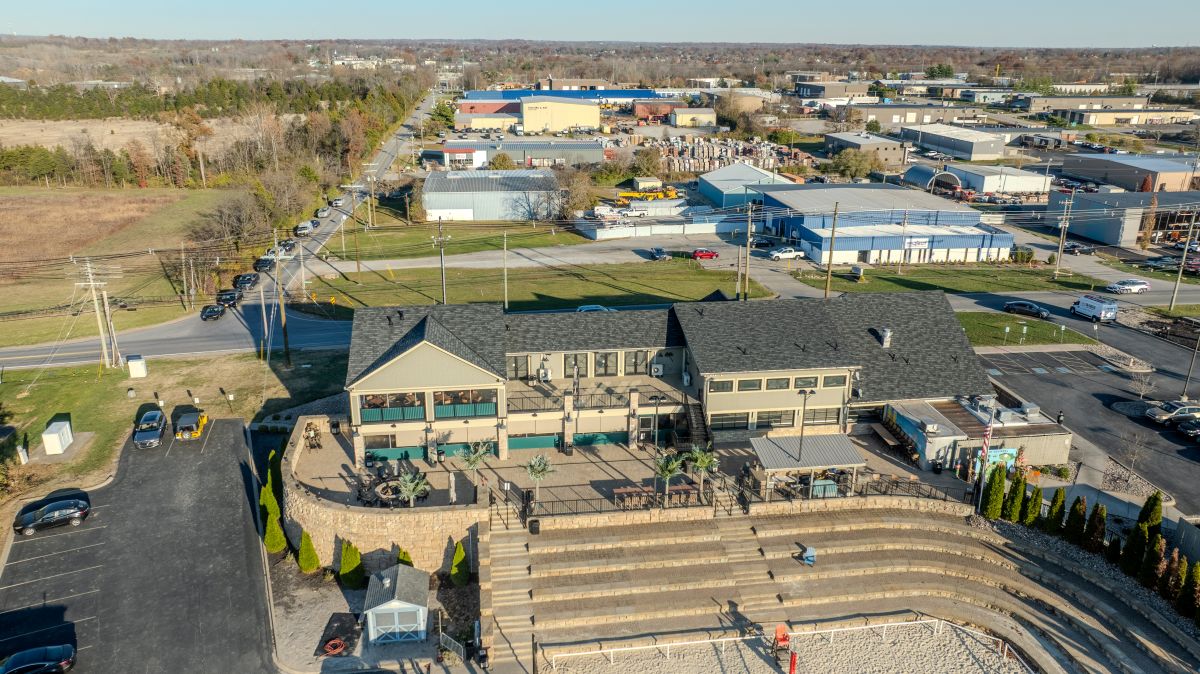
When a commercial building uses shingles, the repair challenges that come with a steep slope system are different from what most property owners expect from flat roof work. Roof shingles repair on a commercial building involves understanding how the system is structured, what causes it to fail, and which fixes actually hold up versus which ones just buy time. For property owners ready to get to the bottom of a roofing problem, exploring your commercial roofing repair options with a qualified contractor is always the right first step.
In this guide, we will cover:
- Why commercial buildings use shingle roofing and where it makes sense
- The most common causes of shingle damage on commercial properties
- Repair approaches matched to specific problems
- How to evaluate whether repair or replacement is the right call
- Common questions property owners ask before scheduling repair work
Why Commercial Buildings Use Shingle Roofing
Asphalt shingles are not limited to residential construction. Churches, schools, retail strip malls, mixed-use buildings, and office complexes with steep slope rooflines frequently use architectural or standard shingles because of their combination of cost, availability, and visual appeal. According to Roofing Contractor magazine’s 2026 State of the Roofing Industry report, steep-slope asphalt shingles remain the most popular roofing product in the industry, with three-fourths of contractors actively involved with them, which reflects just how widespread shingle systems continue to be across both commercial and residential construction.
Properties across Atlanta, Georgia and the surrounding region deal with intense summer heat, heavy rainfall, and occasional hail events, all of which accelerate the wear patterns that lead to the most common shingle repair calls. We’re proud to serve home and business owners in Atlanta, Georgia and nearby communities with commercial roof repair services and more.
How Commercial Shingle Roofs Differ From Residential Systems
Commercial shingle applications often involve larger roof areas, more complex penetrations from HVAC equipment, and greater exposure to foot traffic from maintenance crews. These factors put additional stress on the shingle field and the flashings around penetrations, which is why commercial shingle roofs tend to need more frequent inspections than a comparable residential installation.
11 Common Causes of Shingle Damage on Commercial Roofs
Most shingle repair calls on commercial buildings trace back to one or more of these recurring issues. Identifying the right cause is the only way to match it with a repair that actually lasts.
1. Wind Damage and Lifted Shingles
High winds are one of the most common causes of roof damage on steep slope commercial roofs, from missing shingles and cracked ridge caps to displaced flashing that goes unnoticed until the next heavy rain.
- What causes it: Edge shingles and ridge caps are particularly vulnerable to uplift, especially if seal strips have lost adhesion due to age or cold temperatures.
- How it is repaired: Lifted shingles are re-sealed and refastened using proper nail placement to prevent leaks; specific tools for repairing shingles include a hammer, flat pry bar, and roofing nails to carefully lift surrounding shingles, remove the damaged course, and set a new shingle cleanly in its place.
2. Hail Impact Damage
Hail causes granule loss, bruising, and in severe cases, punctures through the shingle mat that leave the roof deck vulnerable to water intrusion.
- What causes it: Hailstones knock off protective granules, leaving the asphalt mat exposed to UV degradation and further damage to the home’s structure over time.
- What to watch for: Granule accumulation in gutters and downspouts after a storm is one of the first visible signs of shingle damage even when the field looks intact from below.
3. Flashing Failures Around Penetrations
Flashing seals the transition between the shingle field and vertical surfaces like chimneys, vents, HVAC curbs, and parapet walls, and inspecting for damaged flashing and roof decking is essential before any shingle repair begins.
- What causes it: Thermal expansion and contraction pull flashing away from the substrate over time, and sealants crack as UV exposure dries them out.
- What to watch for: Leaks near rooftop HVAC units, skylights, or walls are almost always flashing related rather than caused by shingle field failure.
4. Granule Loss and UV Degradation
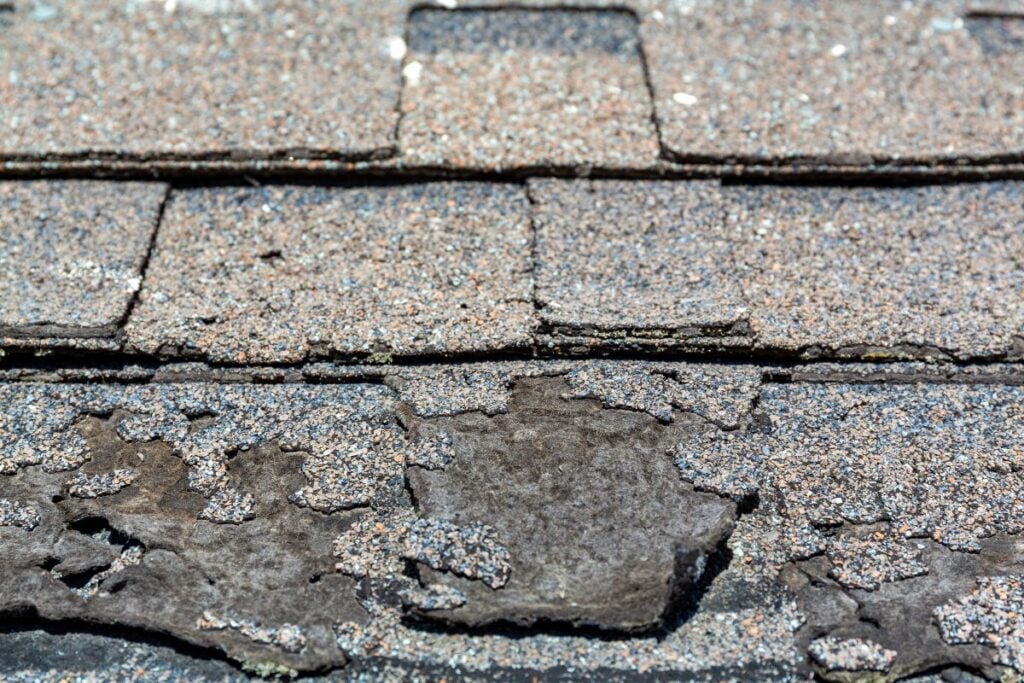
As granules wear away through age, weather, and physical contact, the exposed mat becomes brittle and prone to cracking, which shortens the remaining life of the existing roof faster than most property owners expect.
- What causes it: Normal weathering, heavy foot traffic on the shingle surface, and storm debris impact all accelerate granule loss.
- What to watch for: Visible bare or discolored patches on the shingle surface are the clearest indicators of significant granule loss that needs attention.
5. Cracked or Curling Shingles
As shingles age, they lose the flexibility that keeps them lying flat, and curling leaves the shingle system vulnerable to wind and water intrusion.
- What causes it: Age, poor roof deck ventilation, and moisture imbalance between the top and bottom shingle surfaces are the most common contributors.
- What to watch for: Curling shingles across multiple areas simultaneously often signal a ventilation problem that must be addressed alongside the shingle repair.
6. Ice Dam Formation
In colder climates, ice dams can cause significant shingle damage in winter by forcing water back beneath the shingle field where it can leak into the building.
- What causes it: Inadequate attic insulation and poor ventilation create the temperature differential that drives ice dam formation at the eave.
- What to watch for: Icicles along the eave and water stains on interior ceilings near exterior walls during winter are classic signs of ice dam related leaks.
7. Damaged or Missing Ridge Caps
The ridge cap takes more wind and UV exposure than any other part of the shingle system, and missing sections leave the most vulnerable point of the roof completely exposed.
- What causes it: High winds, UV breakdown of adhesive strips, and age cause ridge caps to lift, crack, or blow off more frequently than field shingles.
- What to watch for: Missing ridge cap sections are rarely visible from the ground and are frequently discovered only during a formal inspection.
8. Underlayment Failure
When underlayment fails, water that gets past the shingle field has nothing stopping it from reaching the decking, and water stains on interior ceilings are often the first sign this layer has been compromised.
- What causes it: Age, condensation from below, and physical damage from roofing work can degrade the underlayment before the shingles above show visible wear.
- What to watch for: Recurring leaks in the same area even after shingle repairs have been made often point to underlayment failure rather than a surface problem.
9. Decking Rot and Soft Spots
When water infiltration is left unaddressed long enough, the roof deck can absorb moisture and begin to rot, creating soft spots that compress underfoot and signal deeper structural damage.
- What causes it: Chronic leaks from any of the issues above that were not caught early enough allow sustained moisture exposure that degrades the decking over time.
- How it is repaired: Rotted sections of the roof deck must be cut out and replaced before new shingles are installed; skipping this step will cause the new shingle courses to fail prematurely.
10. Improper Nailing From Original Installation
Shingles nailed too high, at an angle, or over-driven are more likely to lift or blow off in high wind events even when the shingles themselves are relatively new.
- What causes it: Shortcuts during the original installation allow shingles to meet minimum code requirements while still underperforming in real weather conditions.
- What to watch for: Shingle blow-off concentrated in specific sections of the roof where wind loads are highest may point to an installation issue rather than material failure.
11. Moss and Algae Growth
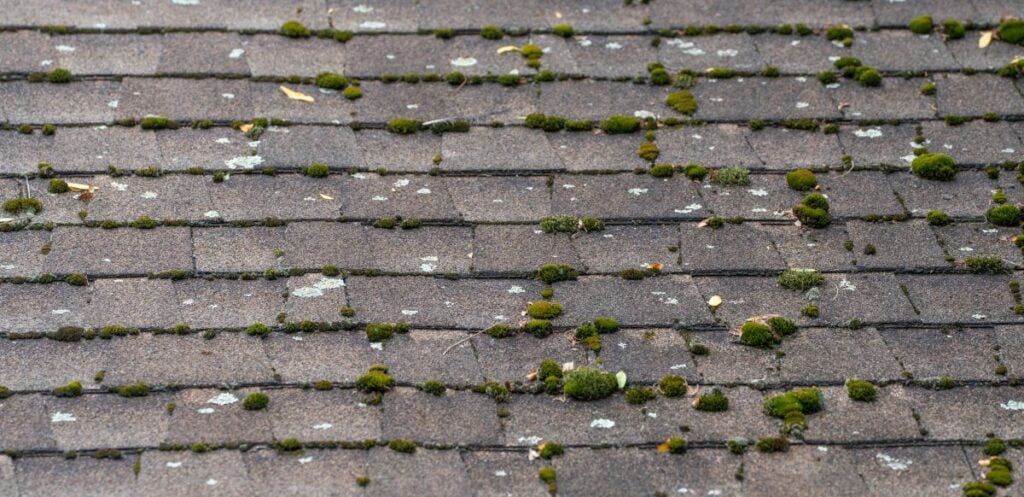
In humid climates, biological growth holds moisture against the granule coating and accelerates deterioration, making seasonal maintenance that prevents buildup an important part of any long-term shingle care plan.
- What causes it: Shaded roof areas combined with regional humidity and nearby trees create ideal conditions for moss and algae to establish and spread.
- How it is repaired: Biological growth is treated and removed carefully; zinc or copper strips installed at the ridge can slow or prevent regrowth over time.
Repair vs. Replacement on a Commercial Shingle Roof
Most isolated shingle repairs are straightforward and cost-effective when caught early. If more than 25 percent of the roof needs repair, a full replacement is often more cost-effective than continued patching, since widespread damaged shingles typically signal systemic material fatigue. Seasonal maintenance that prevents snow and ice buildup plays a meaningful role in how long a shingle system holds up, particularly on roofs where freeze-thaw cycles add cumulative stress each winter.
| Situation | Recommended Action |
| Isolated wind or hail damage on a roof under 15 years old | Targeted repair |
| Flashing failure with dry decking beneath | Reflash affected areas |
| Widespread granule loss or curling across the field | Evaluate for full replacement |
| Decking rot discovered beneath the shingles | Deck repair required before reroofing |
| Recurring leaks after multiple repairs | Comprehensive inspection before next repair |
Common FAQs About Commercial Shingle Roof Repair
Property owners managing steep slope commercial roofs ask similar questions before scheduling repair work. Here are the ones we hear most often.
How do I know if shingle damage requires repair or full replacement?
Isolated shingle damage on a relatively young roof usually warrants repair. Widespread granule loss, systemic curling, or recurring leaks despite multiple repairs typically indicate the system has reached a point where a full replacement is the more cost-effective long-term decision.
Will my insurance cover shingle damage on a commercial building?
Storm-related storm damage from hail and wind is commonly covered under commercial property policies. An inspection that clearly documents the cause and extent of damage is essential for supporting the claim.
How long does a commercial shingle roof typically last?
Most architectural shingle systems on commercial buildings are rated for 20 to 30 years, though actual lifespan depends heavily on installation quality, ventilation, climate exposure, and how consistently the roof is maintained.
What maintenance keeps a commercial shingle roof in good condition?
Regular inspections twice a year, keeping gutters clear, removing biological growth before it spreads, and addressing small repairs promptly are the most effective ways to extend the service life of a commercial shingle system.
Advanced Solutions: Commercial Shingle Repairs That Hold Up
Shingle roofing on commercial buildings deserves the same level of expertise and attention to detail that flat roofing systems get, and cutting corners on repairs only delays the larger costs that follow. Our team has helped property owners across Texas, Missouri, Kentucky, Tennessee, and Georgia restore steep slope roofing systems quickly and correctly, with an honest assessment of whether repair or full replacement is the smarter investment.
Whether you are dealing with storm damage, a persistent leak, or a system that has been deferred a few years too long, we are ready to help. Request your free commercial roof inspection and get a clear picture of what your shingle roof actually needs.