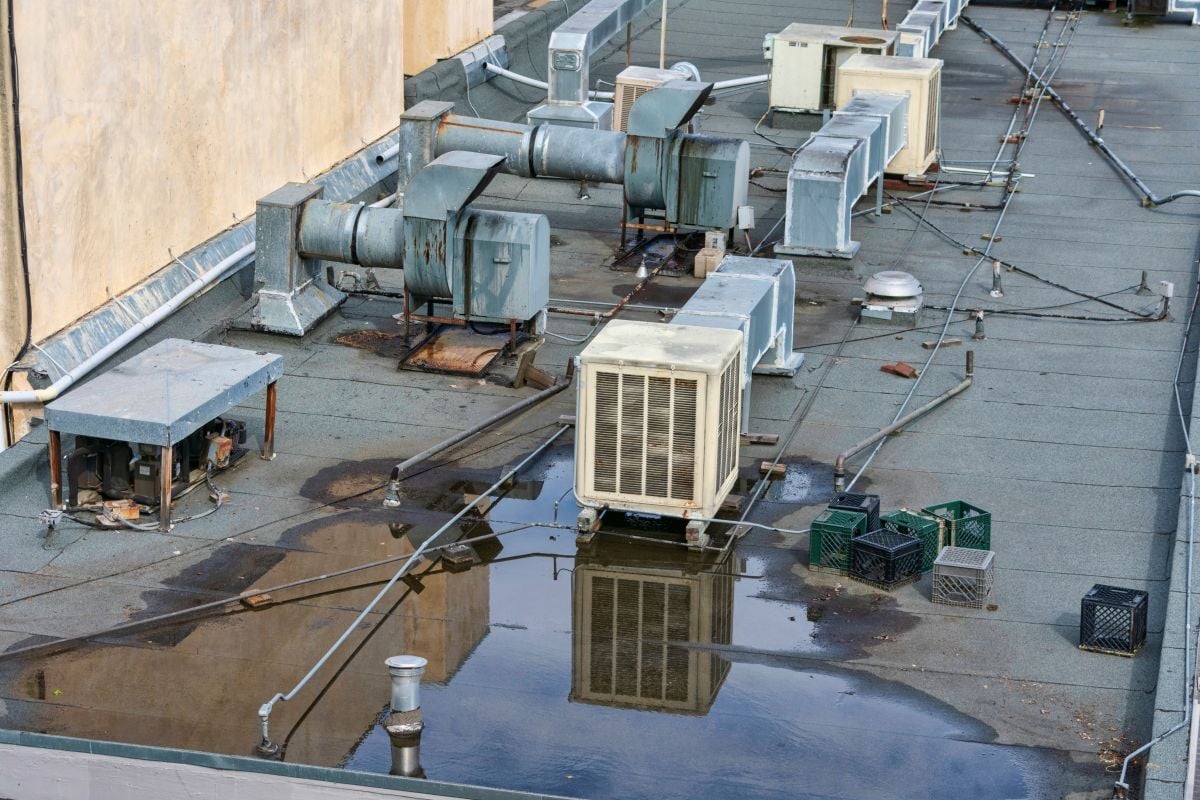
Featured Article
Wind Damage to Roof Systems: What August Storms Leave Behind
August is one of the most active months for the kind of storms that do the most damage to commercial roofing systems. Derechos, severe thunderstorms, and late-season tropical systems combine to produce wind events that range from persistent 50-mph gusts to sudden blasts well above hurricane force. Wind damage to roof systems often looks different from what property owners expect, and the damage that matters most is frequently not the kind that announces itself with an obvious interior leak. Knowing what to look for after an August storm is the starting point for responding correctly, and understanding what storm-driven roof damage actually covers in a typical insurance claim helps you act with confidence when it counts.
In this guide, we will cover:
- Why August storms create unique roof damage patterns
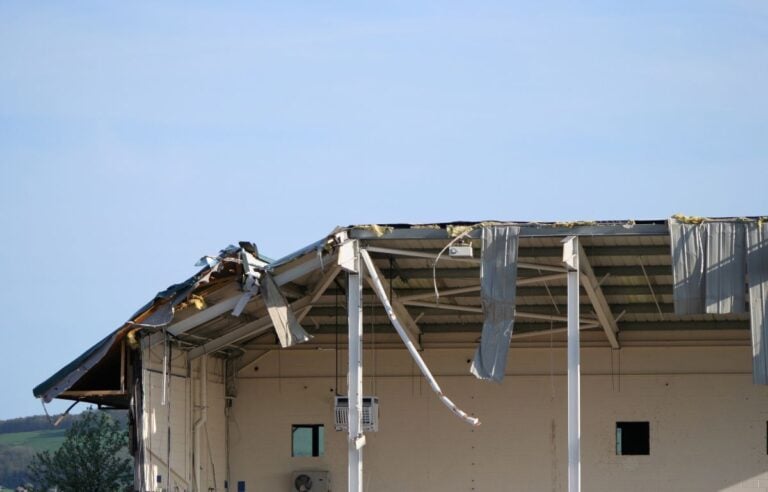
- The eight most common forms of wind damage on commercial roofs
- How wind damage differs by roofing system type
- What property owners should do in the 48 hours after a storm
- Common questions about wind damage claims and repairs
Why August Storms Hit Roofs Differently
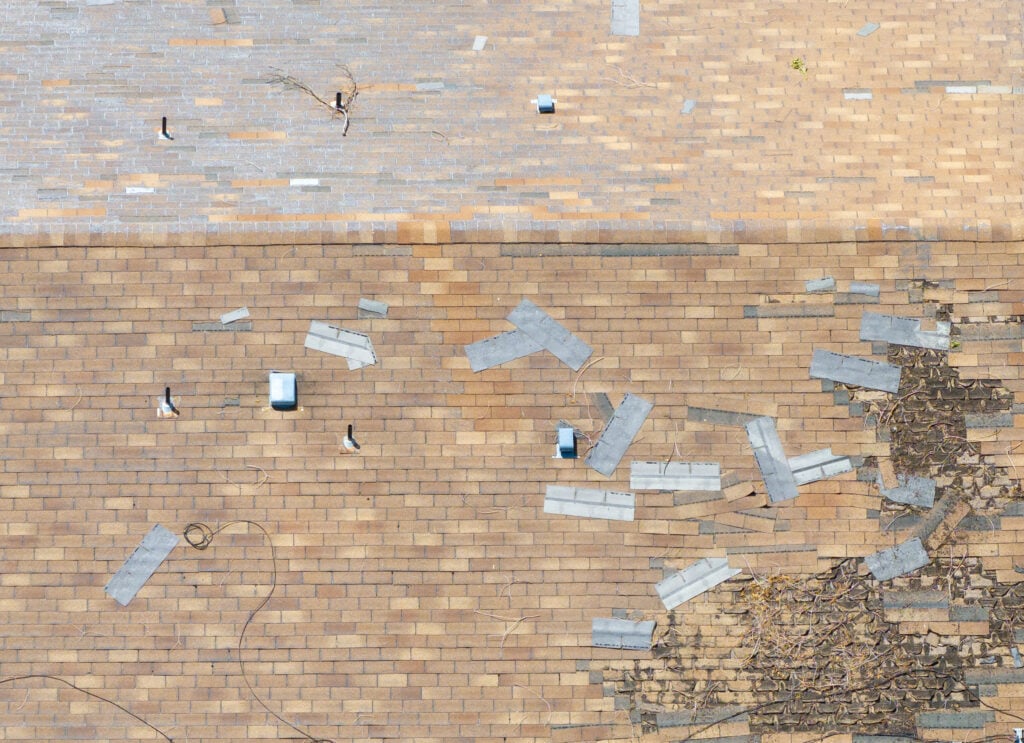
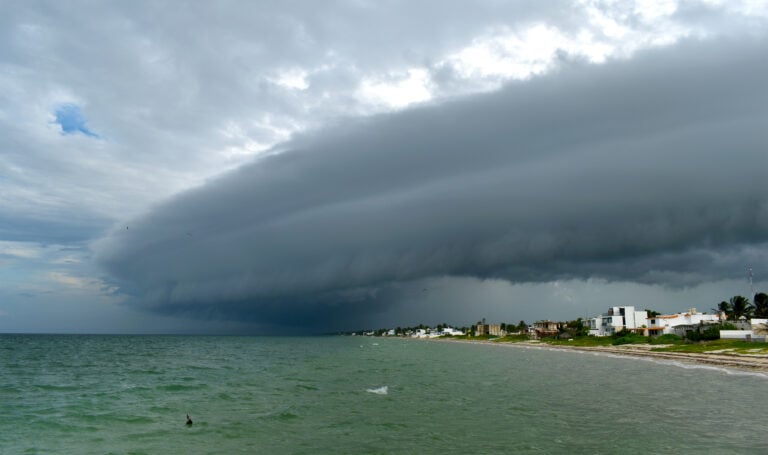
August thunderstorms, derechos, and early tropical systems share a common characteristic that makes them particularly damaging to roofing systems: strong winds combine with sudden pressure changes and in many cases with heavy rain, all at the same time. A severe storm that qualifies as a major storm event can produce wind blows that stress every component of a roofing system simultaneously, and a roof that holds up fine against steady wind can fail against the rapid pressure shifts that come with a fast-moving derecho or the wind-driven rain that follows a squall line.
On August 11, 2026, the National Weather Service confirmed that a derecho produced widespread straight-line winds of 70 to locally over 100 mph across northeastern Illinois and northwestern Indiana, with peak gusts assessed at 100 to 110 mph in some areas, causing significant structural and roofing damage across a wide corridor. Events like this are not rare in late summer, and their wind patterns produce a specific set of roofing failures that every property manager should recognize.
Properties across Nashville, Tennessee and the surrounding region experience active August storm seasons that include derecho-producing squall lines, straight-line winds, and occasional remnant tropical moisture that drives sustained wind and rain. We’re proud to serve home and business owners in Nashville, Tennessee and nearby communities with storm damage roofing and restoration services and more.
Why August Damage Often Goes Unreported
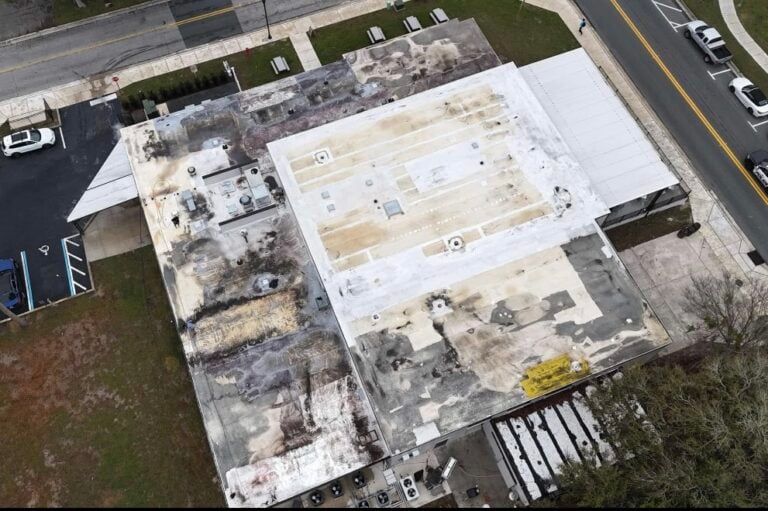
Wind damage does not always show up as a visible hole or an active leak. Edge lifting, seam separation, and flashing displacement can allow water to enter the roof assembly gradually, often showing up as interior staining or insulation saturation weeks after the original storm. Getting the roof inspected within 48 to 72 hours of a major storm is one of the most important steps a property owner can take to prevent further damage from compounding before it is found. Many storms also combine wind with hail damage, which means a post-storm inspection needs to assess both impact and uplift effects rather than treating them as separate concerns.
8 Types of Wind Damage Commonly Left Behind by August Storms
Most wind damage to commercial roofing systems falls into one or more of these eight categories. Recognizing each one helps property managers make faster decisions after a storm.
1. Membrane Edge Lifting and Blow-Off
On flat and low slope roofs, wind creates uplift pressure at the perimeter and corners where pressure differentials are greatest. Membrane edges that have lost adhesion or were never fully secured are the most vulnerable.
- What it looks like: Membrane edges that are visibly lifted, curled, or displaced at the roof perimeter, particularly at corners and along parapet walls where wind forces concentrate.
- Why it matters: A lifted membrane edge allows wind-driven rain to enter beneath the membrane with each subsequent rain event, often saturating insulation before the damage is identified.
2. Seam Separation
Wind-driven pressure cycling stresses adhesive and heat-welded seams repeatedly during a storm event. Seams that were already aging or marginally bonded can separate under that repeated loading.
- What it looks like: Seam lines that are visibly open, raised, or show evidence of recent separation when the roof is inspected close-up.
- Why it matters: An open seam allows water to infiltrate the roof assembly at a predictable line across the roof, often affecting a larger area than the seam itself.
3. Flashing Displacement
Flashing around HVAC units, curbs, skylights, and parapet walls is frequently thinner and more exposed than the field membrane, and it is often the first component to fail when wind events create rapid pressure changes.
- What it looks like: Flashing that has pulled away from the substrate, lifted at its edges, or been displaced entirely from around a penetration.
- Why it matters: Displaced flashing creates direct water entry points at the exact locations where penetrations make the roof most vulnerable to leak.
4. Shingle Loss and Blow-Off on Steep Slope Roofs
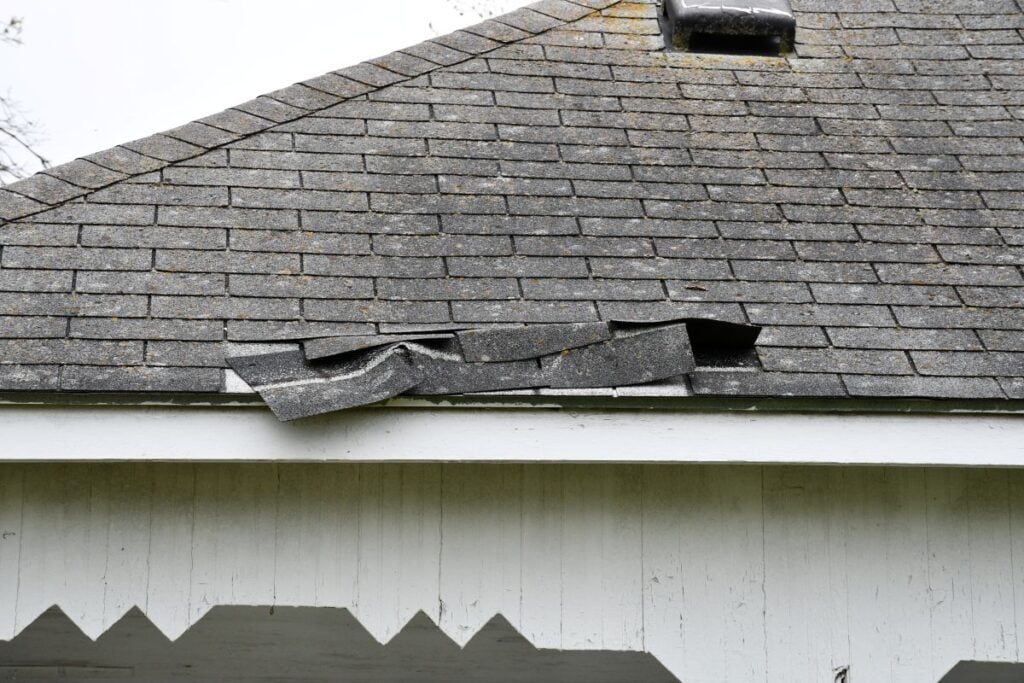
On steep slope commercial roofs including churches, schools, and mixed-use buildings, high winds dislodge individual shingles and in severe cases entire sections, leaving the underlayment or decking directly exposed.
- What it looks like: Missing shingles visible from the ground or identified during a post-storm inspection, often concentrated at ridges, edges, and areas of maximum wind exposure.
- Why it matters: Any area of exposed underlayment or decking becomes a guaranteed leak point with the next rainfall, and delay compounds the water damage significantly.
5. Ridge Cap Displacement
Ridge caps take the highest wind exposure on any steep slope roof and are more vulnerable to uplift than field shingles because of their position at the peak where wind pressure is greatest.
- What it looks like: Missing, cracked, or shifted ridge cap shingles along the roof peak, sometimes visible from the ground and often missed without a formal inspection.
- Why it matters: Unprotected ridge sections allow wind-driven rain to penetrate at the highest point of the roof, often traveling down the interior structure before appearing as a visible stain.
6. Debris Impact Damage
Fast-moving storm systems drive tree branches, gravel, equipment pieces, and other debris onto rooftop surfaces at speeds sufficient to puncture membranes and damage flashings.
- What it looks like: Punctures, tears, or gouges in the membrane field, dented metal flashings, and crushed or shifted rooftop equipment housings.
- Why it matters: Even small debris impacts create breach points that allow water intrusion over time, and the damage is not always visible without a close surface inspection.
7. Structural Racking and Decking Stress
Extreme wind events, particularly derechos and tornadoes, can create enough lateral force on a building to stress or shift the roof deck itself, creating separation between roofing components and the structure beneath.
- What it looks like: Visible sagging, uneven roof surface profile, or evidence of fastener pull-through when the roof deck is inspected.
- Why it matters: Structural deck issues require more than a membrane repair to address and need to be identified before any surface restoration work is attempted.
8. HVAC Unit and Rooftop Equipment Displacement
Large commercial HVAC units, exhaust fans, and satellite equipment can shift or overturn in extreme wind events, tearing flashings and creating open penetrations that compromise the entire roofing assembly.
- What it looks like: Equipment that has shifted from its original position, damaged equipment housings, torn or disconnected flexible duct connections at rooftop units.
- Why it matters: Equipment displacement creates large, open breaches in the roof surface that allow rapid water infiltration and may require both roofing and mechanical repairs to fully resolve.
How Wind Damage Differs by Roofing System
Different roofing materials respond differently to wind loading, which affects both what damage looks like and how quickly it needs to be addressed.
| Roofing System | Primary Wind Vulnerability | Most Common Post-Storm Finding |
| Single-Ply Membrane (TPO/EPDM/PVC) | Edge and perimeter lifting | Membrane displacement at corners and seams |
| Modified Bitumen | Seam separation and surface cracking | Open seams and cap sheet displacement |
| Standing Seam Metal | Fastener fatigue and panel uplift | Raised or displaced panels at seam lines |
| Asphalt Shingles | Uplift and tab cracking | Missing shingles and ridge cap displacement |
| BUR / Built-Up Roofing | Gravel displacement and flashing failure | Surface scour and exposed bitumen |
What to Do in the 48 Hours After an August Storm
The window immediately following a wind event is when property owners have the most influence over both the damage outcome and the insurance claim that follows.
- Inspect soft metals first: Gutters, downspouts, HVAC housings, and window frames show wind and impact damage clearly and provide supporting evidence for a roof inspection and insurance claim.
- Document before cleanup: Photograph every area of visible exterior damage before debris is removed or any temporary repairs are made.
- Get on the roof safely or hire an inspector: A surface inspection is the only reliable way to identify membrane lifting, seam separation, and flashing displacement before the next rain.
- Notify your insurance carrier: Report storm damage as soon as it is confirmed and request documentation of your policy’s notification requirements.
- Arrange emergency repairs if the roof is breached: Temporary tarping or membrane patching stops further water entry while a full assessment and permanent repair are planned.
Common FAQs About Wind Damage to Roof Systems
Property owners dealing with post-storm roof concerns tend to ask similar questions before deciding how to respond. Here are the ones we hear most often.
How do I know if August storm winds were strong enough to damage my roof?
If wind speeds in your area exceeded 50 mph during the storm, a roof inspection is warranted. Derechos and severe thunderstorm lines regularly produce winds in the 60 to 90 mph range, which is enough to cause meaningful damage even on well-maintained systems.
Does homeowners or commercial property insurance cover wind damage to the roof?
Wind damage from storms is one of the most commonly covered perils in both homeowners insurance and commercial property policies. Coverage terms vary by carrier and region, and policies in some coastal areas carry separate wind deductibles. Prompt notification and thorough documentation are essential for any wind damage claim.
Can wind damage be repaired without full roof replacement?
Yes, in most cases. Isolated membrane lifting, seam separation, shingle loss, and flashing displacement can be repaired when the underlying structure and insulation are intact. Widespread damage or structural issues may change that calculus.
How long after a storm do I have to file a wind damage claim?
Most policies require notification within a specific timeframe after a storm event. Filing promptly after damage is discovered is always the right approach, since delays give insurers grounds to question whether damage was storm-related.
What if wind damage is not immediately obvious after a storm?
Subtle wind damage including minor membrane lifting and seam displacement may not cause interior symptoms for weeks. A post-storm professional inspection is the only reliable way to rule out damage that is not visible from the ground.
Advanced Solutions: On the Roof After Every August Storm
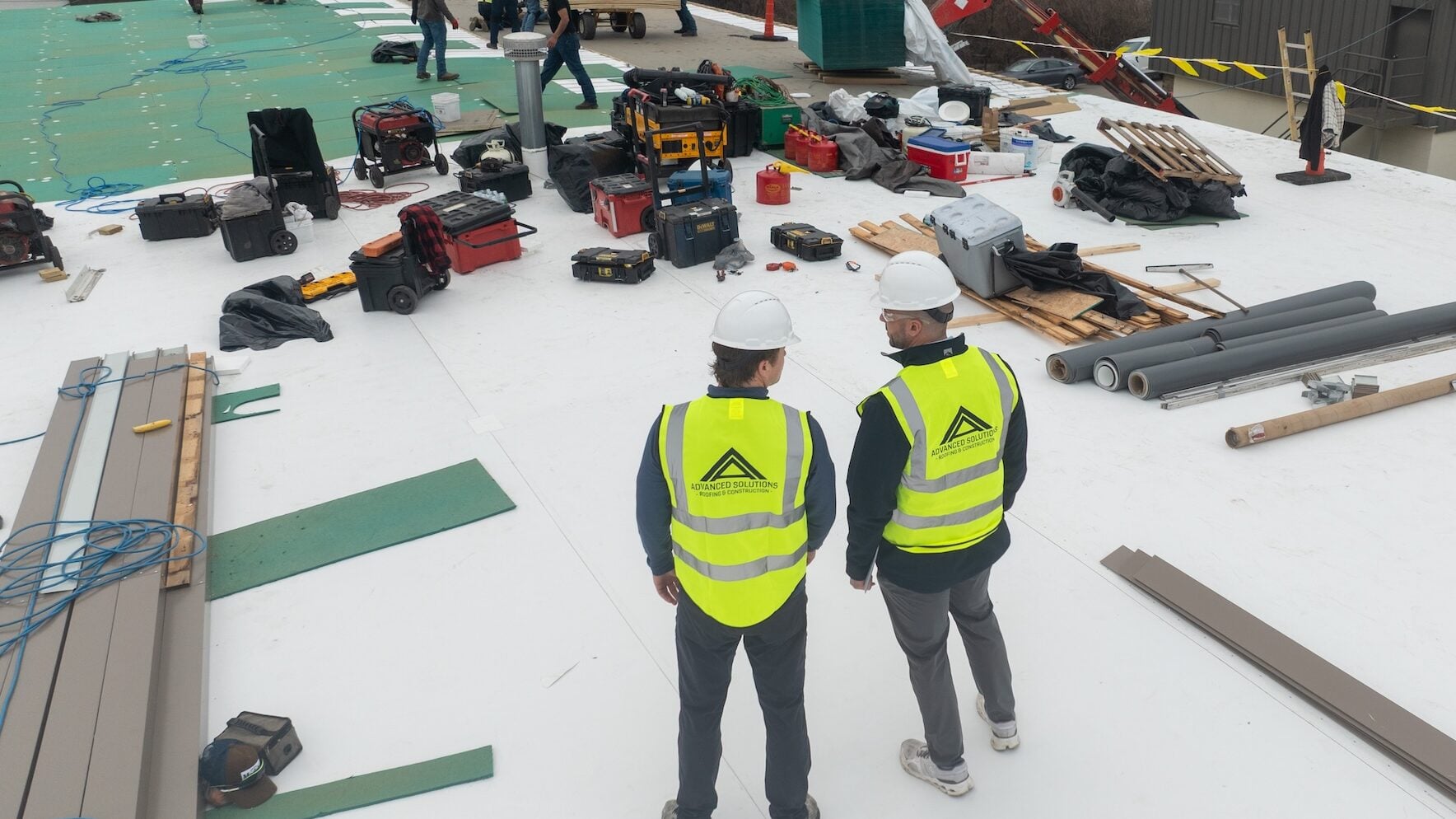
Wind damage moves faster from manageable to expensive than most property owners expect, and the 48 hours after a storm are when the outcome is most within your control. Advanced Solutions has helped property owners across Texas, Missouri, Kentucky, Tennessee, and Georgia identify post-storm wind damage, document losses accurately for insurance claims, and restore roofing systems with minimal disruption.
If your building was in the path of a recent storm, do not wait for an interior symptom before acting. Connect with our storm response team and get a professional eye on your roof before the next rain event.