Featured Article
EPDM Roofing: Why It Works for Flat Roofs
Not every roofing material holds up across the range of conditions a flat or low slope commercial roof faces, but EPDM roofing has earned a consistent track record across climates, building types, and decades of use. Understanding why this system performs so well on flat applications, and where it does have limits, gives property owners a clear framework for evaluating whether it fits their building. If you are already thinking through options, getting a closer look at flat roof system options for your building with an experienced team is worth doing before committing to any material.
In this guide, we will cover:
- What makes EPDM particularly suited to flat and low slope roof applications
- The five core performance advantages that drive its popularity
- How installation method affects long-term performance on flat roofs
- Where EPDM has real limitations worth knowing before you commit
- Common questions property owners ask before choosing EPDM
What Makes EPDM Different From Other Flat Roofing Options
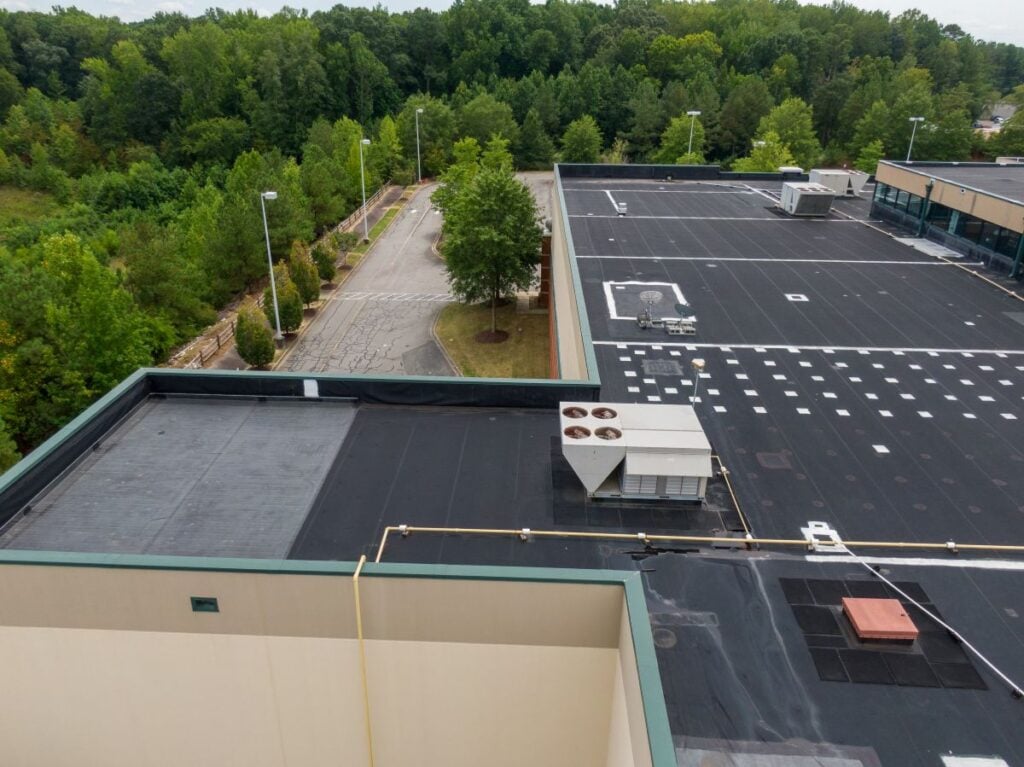
EPDM stands for ethylene propylene diene monomer, a synthetic rubber membrane produced in large sheets and installed as a single layer across the roof surface. Its rubber chemistry is what sets it apart from thermoplastic membranes like TPO and PVC. Where thermoplastics rely on heat welded seams, EPDM depends on adhesive bonded or tape-sealed laps, and where thermoplastics can become brittle in extreme cold, EPDM retains the flexibility that keeps it performing through freeze-thaw cycles that would stress other systems.
Oak Ridge National Laboratory researchers have monitored EPDM membranes installed over low-sloped roofs for years in their Roof Thermal Research Apparatus, collecting hourly temperature and heat flux data that consistently demonstrates EPDM’s durability and thermal stability under real-world flat roof conditions, making it one of the most studied membrane systems in the industry.
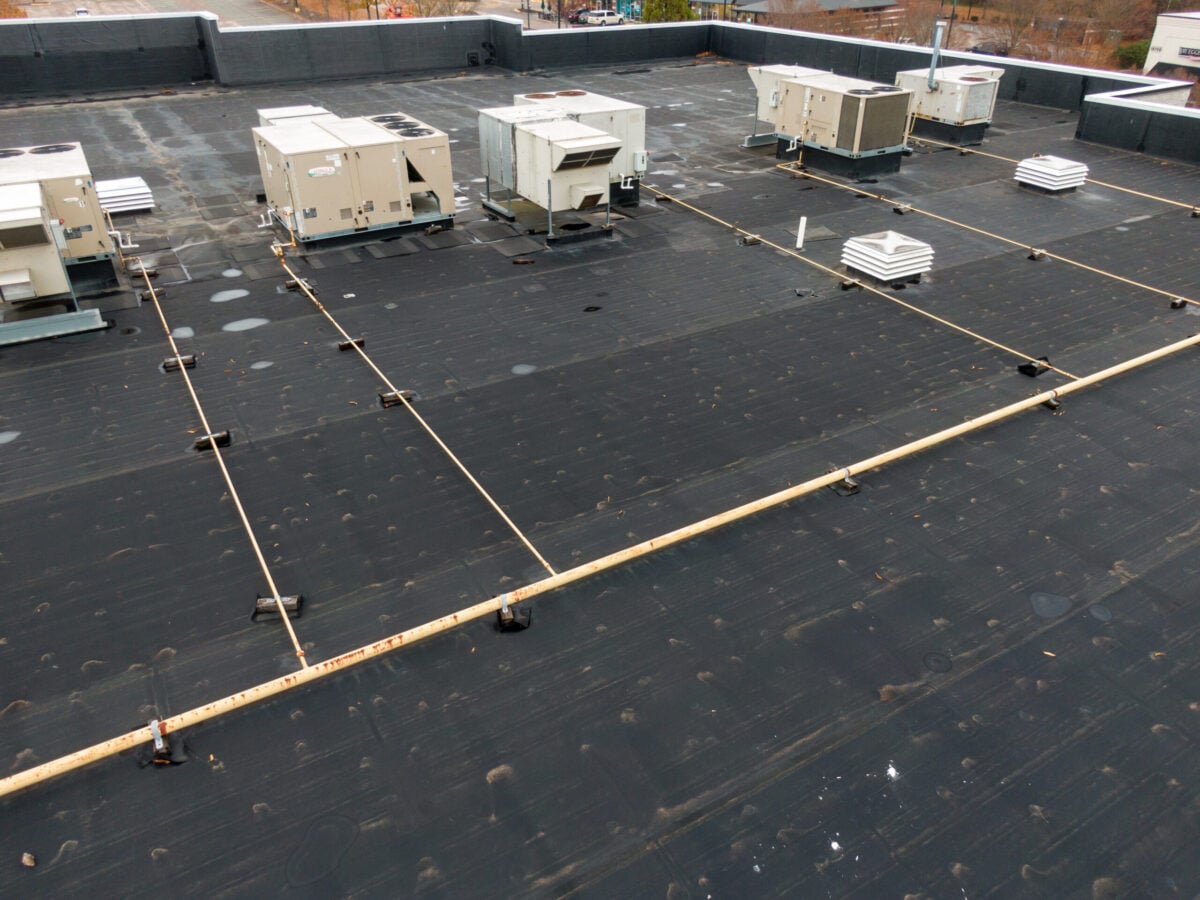
Properties across Atlanta, Georgia and the surrounding region deal with intense summer heat, significant rainfall, and the occasional late season storm, all conditions that test a flat roofing membrane’s weather resistance year after year. We’re proud to serve home and business owners in Atlanta, Georgia and nearby communities with EPDM roofing and flat roof services and more.
Why Flat Roofs Create Different Performance Demands
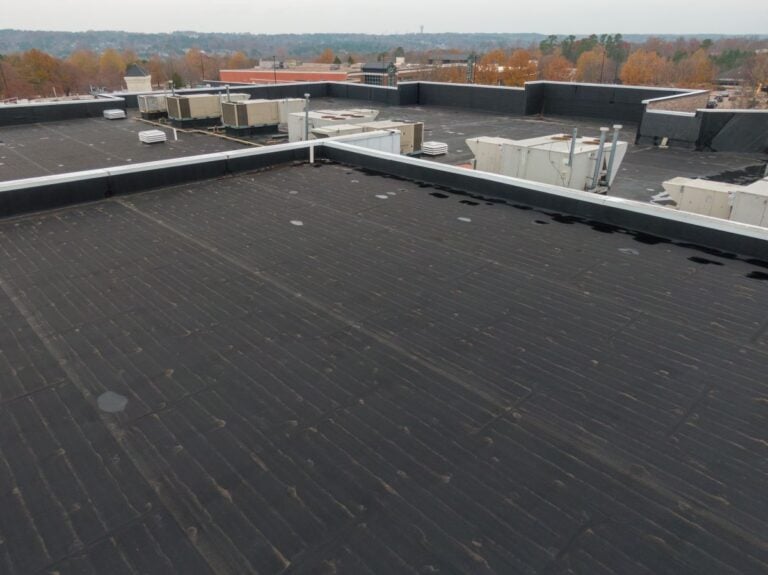
A flat or low slope roof does not shed water the way a steep slope system does. Water moves slowly, drains depend on proper slope and clear outlets, and the membrane bears the full load of whatever weather hits it without the advantage of gravity doing most of the work. That context matters when evaluating EPDM, because a system that performs well on a flat roof earns that performance through chemistry and installation quality rather than profile alone.
5 Reasons EPDM Works Well on Flat Roofs
These five performance characteristics explain why EPDM has remained one of the most widely specified membranes for flat and low slope applications across commercial construction.
1. Outstanding Weather and UV Resistance
EPDM’s rubber chemistry gives it inherent resistance to UV radiation, ozone, and weather-driven aging that many other membrane types cannot match without additional coatings or treatments. This matters most on flat roofs where the membrane faces direct overhead sun exposure for decades.
- Why it holds up: The EPDM polymer chain is inherently stable under UV exposure, which means the membrane does not degrade and become brittle the way some thermoplastic systems do over time.
- What that means for flat roofs: Long-term UV resistance reduces the rate of seam and field degradation, which directly extends the interval between major repair needs.
2. Cold Weather Flexibility
Flat roofs in climates with hard winters experience repeated freeze-thaw cycling that puts stress on every seam and flashing detail. EPDM stays flexible at temperatures well below freezing, which reduces cracking and seam stress through those cycles.
- Why it holds up: The rubber chemistry of EPDM allows it to remain pliable at temperatures where PVC and some TPO membranes become significantly stiffer and more prone to stress failure.
- What that means for flat roofs: Buildings in cold climates that experience dramatic seasonal temperature swings see fewer cold-weather seam failures with EPDM than with less flexible systems.
3. Ponding Water Resistance
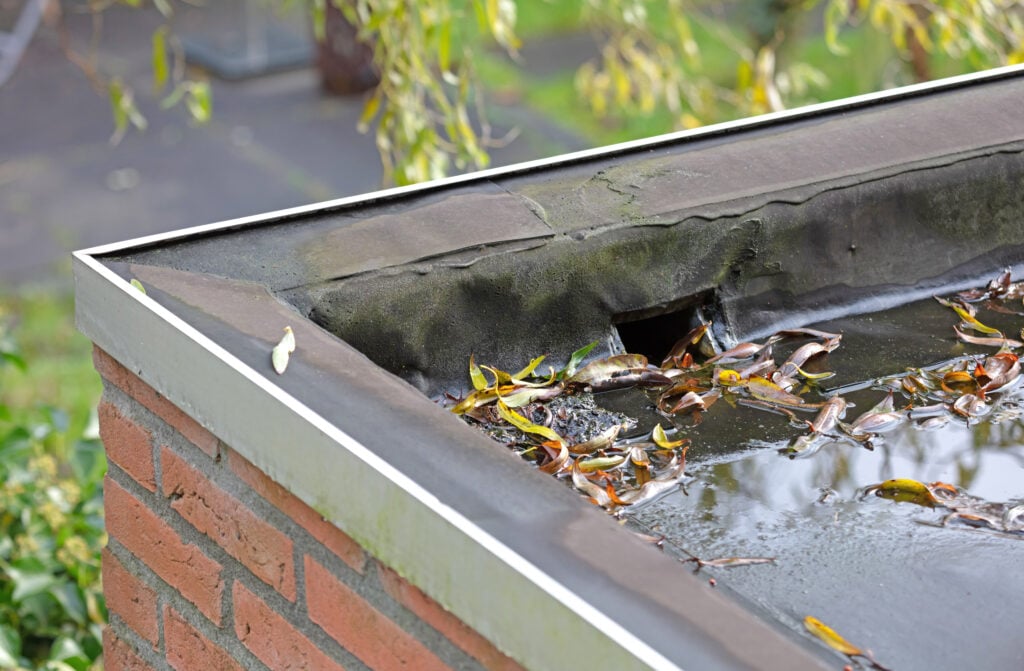
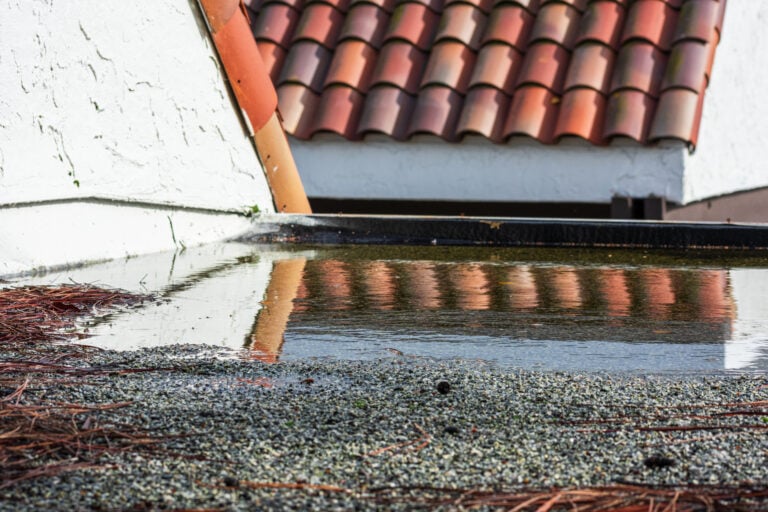
Unlike acrylic coatings and some other membrane types that break down under sustained water contact, EPDM handles ponding water well. This is a meaningful advantage on flat roofs where perfect drainage is rarely guaranteed.
- Why it holds up: EPDM does not absorb water or chemically degrade when submerged for extended periods, which keeps the membrane intact even on roofs with chronic drainage challenges.
- What that means for flat roofs: Roofs with low spots or partially blocked drains are less likely to develop leak points from ponding when EPDM is the membrane, though drainage improvements are still recommended alongside any flat roof system.
4. Long Service Life With Low Maintenance
EPDM’s documented service life on flat commercial roofs consistently reaches 25 to 40 years with proper installation and routine maintenance, making it one of the more cost-effective single-ply options on a dollars-per-year-of-service basis.
- Why it holds up: The membrane’s physical properties remain stable over time, particularly in systems installed with thicker 60 mil or 90 mil membranes that resist punctures and wear better than thinner options.
- What that means for flat roofs: Property owners get a system that requires biannual inspections and prompt seam repairs rather than frequent and expensive intervention throughout its service life.
5. Installation Flexibility Across Flat Roof Conditions
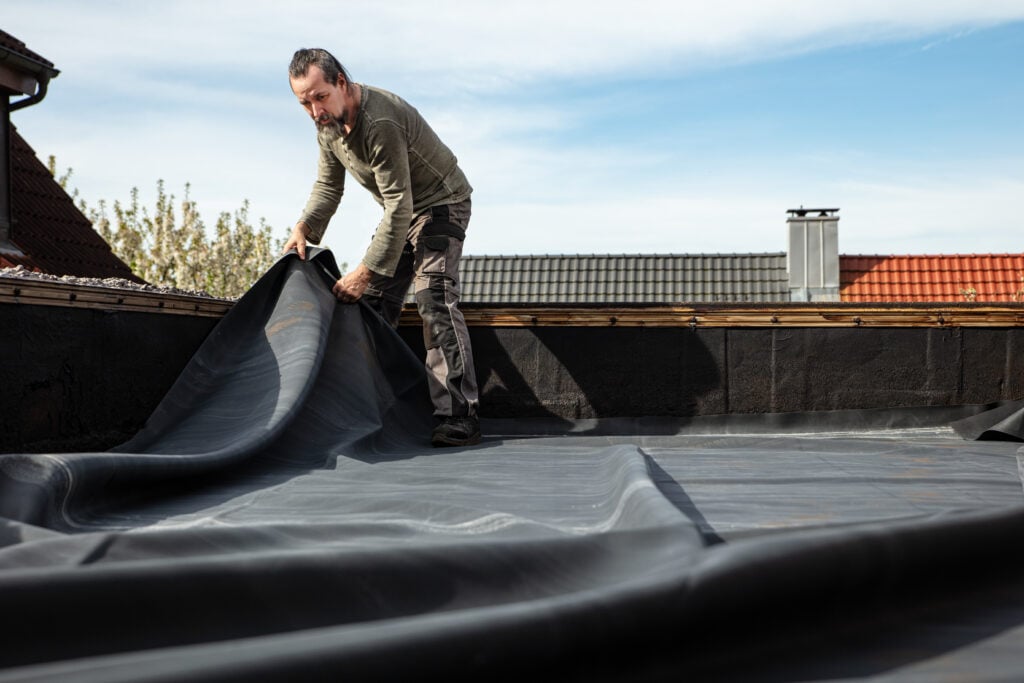
EPDM can be installed using fully adhered, mechanically fastened, or ballasted methods, which gives contractors the flexibility to match the installation approach to the specific conditions of the building’s flat roof deck.
- Why it holds up: Different substrate conditions, wind exposure requirements, and budget considerations call for different installation approaches, and EPDM accommodates all three without changing the base membrane.
- What that means for flat roofs: A single membrane type can serve a wide range of flat roof conditions, from lightweight metal decks that require mechanical fastening to concrete structures well-suited to fully adhered systems.
Where EPDM Has Real Limits on Flat Roofs
EPDM is not the right answer for every flat roof situation, and knowing its limitations matters as much as knowing its strengths.
- Seam vulnerability: Adhesive bonded EPDM seams are more maintenance-sensitive than heat-welded thermoplastic seams and need periodic inspection to catch any separation before it becomes a leak.
- Dark surface heat absorption: Standard black EPDM absorbs significantly more solar energy than white TPO or PVC membranes, which can increase cooling costs on buildings in hot climates. White EPDM and reflective coatings address this but add cost.
- Chemical incompatibility: EPDM is not compatible with oil-based products or some common roofing adhesives, which means any repair or accessory material needs to be specifically compatible with EPDM chemistry.
EPDM vs. Other Flat Roof Membrane Options
| Factor | EPDM | TPO | PVC |
| Cold Weather Flexibility | Excellent | Good | Fair |
| UV Resistance | Excellent | Good | Good |
| Ponding Water Resistance | Excellent | Good | Excellent |
| Reflectivity (standard) | Low (black) | High (white) | High (white) |
| Typical Lifespan | 25 to 40 years | 15 to 20 years | 20 to 30 years |
| Upfront Cost | Lowest | Moderate | Highest |
Common FAQs About EPDM Roofing on Flat Roofs
Property owners evaluating EPDM for flat roof applications tend to ask the same questions before committing to the system. Here are the ones we hear most often.
How long does EPDM typically last on a flat commercial roof?
Most EPDM flat roof systems perform well for 25 to 40 years with proper installation and maintenance. Thicker membranes and fully adhered installation tend to reach the higher end of that range.
Is EPDM a good choice for flat roofs in hot climates?
Standard black EPDM absorbs more heat than white membranes, which can add cooling costs in hot climates. White EPDM and reflective coatings applied over existing black systems address this effectively and are worth evaluating for buildings with high cooling loads.
What causes most EPDM failures on flat roofs?
Seam separation, flashing failures around penetrations, and punctures from rooftop foot traffic account for the majority of EPDM repair calls. Most of these are preventable through biannual inspections and prompt attention to minor issues before they develop into active leaks.
Can EPDM be installed over an existing flat roof membrane?
In many cases, yes. A thorough inspection of the existing substrate determines whether a recover is feasible or whether tear off is required first. Recovering avoids demolition costs and keeps the building fully operational during installation.
How does EPDM compare to TPO for flat commercial roofs?
EPDM holds a long-term advantage in cold weather flexibility and UV resistance, while TPO typically offers better solar reflectance in its standard white form. Budget, climate, and rooftop conditions all factor into which system fits best for a specific flat roof application.
Advanced Solutions: EPDM Flat Roofing Done Right
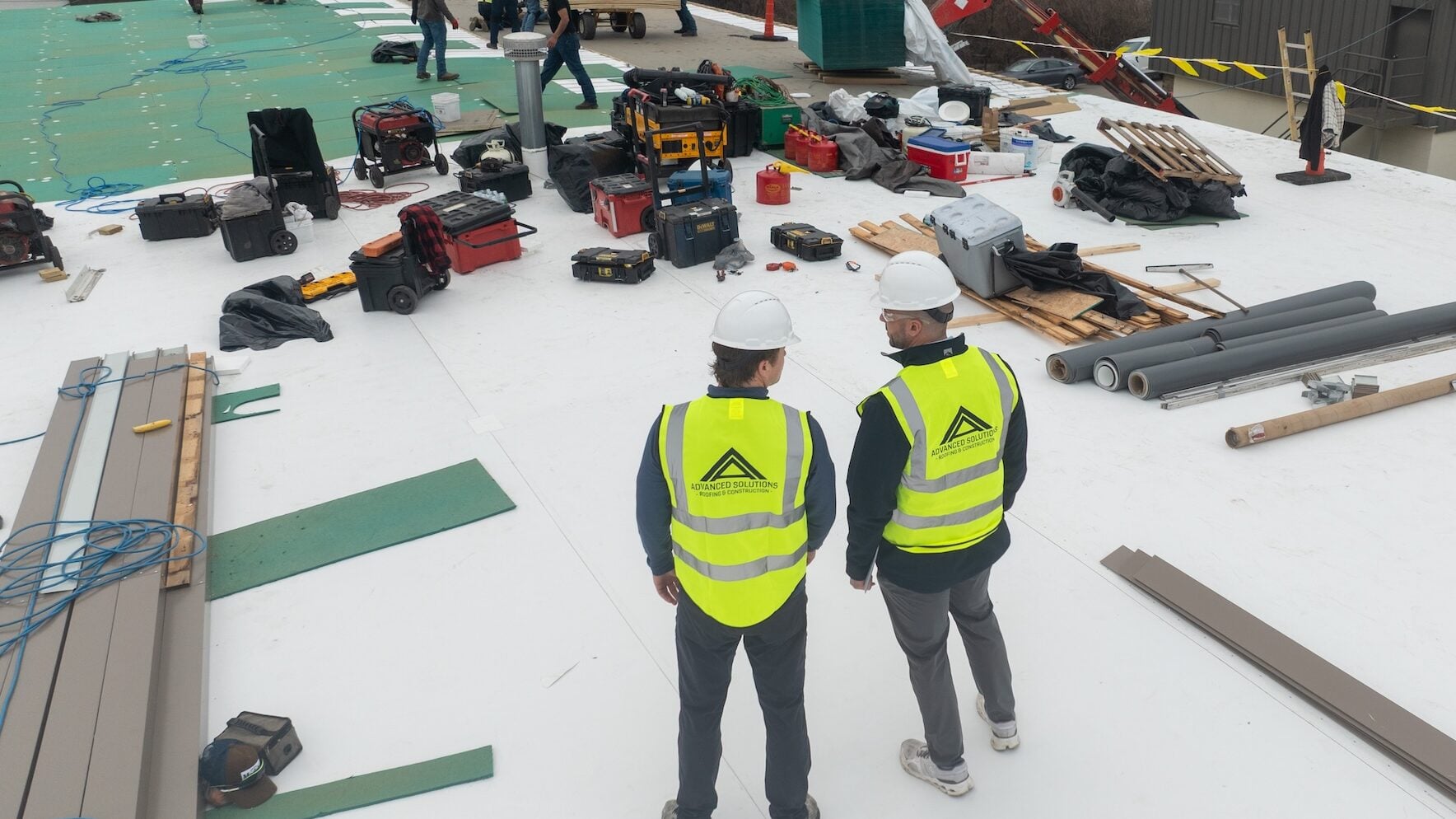
EPDM has earned its place as one of the most reliable flat roofing systems available, and the gap between a well-installed EPDM roof and a poorly installed one is significant. Our team has helped property owners across Texas, Missouri, Kentucky, Tennessee, and Georgia install, repair, and maintain EPDM systems that consistently reach and exceed their rated service life.
Whether you are evaluating EPDM for a new installation or dealing with an aging flat roof that needs a fresh start, we are ready to give you an honest assessment. Get your flat roof evaluation scheduled and find out exactly what your building’s roof needs.