Featured Article
Commercial Roof Storm Damage: Signs to Watch For
Commercial roof storm damage can happen suddenly and often goes unnoticed until it turns into a major problem. High winds, heavy rain, hail, and flying debris can all impact a commercial property, especially flat roofs that are more exposed to standing water and drainage issues. Knowing what signs to watch for after a storm can help you act quickly, reduce further damage, and avoid costly repairs.
- Hidden damage is common: Not all storm damage is visible from the ground.
- Small issues escalate quickly: Minor damage can turn into major leaks if ignored.
- Early detection saves money: Identifying problems early reduces repair costs.
- Professional inspections matter: A roofing contractor can uncover issues you might miss.
What Causes Commercial Roof Storm Damage
Storm damage can affect different types of commercial roofing systems in various ways depending on the severity of the weather.
- High winds: Can lift roofing materials, loosen seams, and expose the underlying structure.
- Hail impact: Creates dents, cracks, and punctures in membranes or metal surfaces.
- Heavy rain: Exploits weak points and leads to water intrusion.
- Debris: Falling branches or objects can cause direct structural damage.
Understanding these causes helps you know what to look for during an inspection.
6 Signs of Commercial Roof Storm Damage
After a storm, it’s important to check for signs of damage—even if everything appears normal at first glance.
1. Visible Roof Damage
Obvious signs like punctures, cracks, or missing materials should be addressed immediately.
- Torn or lifted roofing materials
- Cracks or holes in the membrane
- Damaged flashing around edges or penetrations
2. Water Leaks or Interior Damage
Water entering the building is one of the most serious signs of storm damage.
- Ceiling stains or discoloration
- Active dripping or pooling water
- Mold growth or moisture buildup
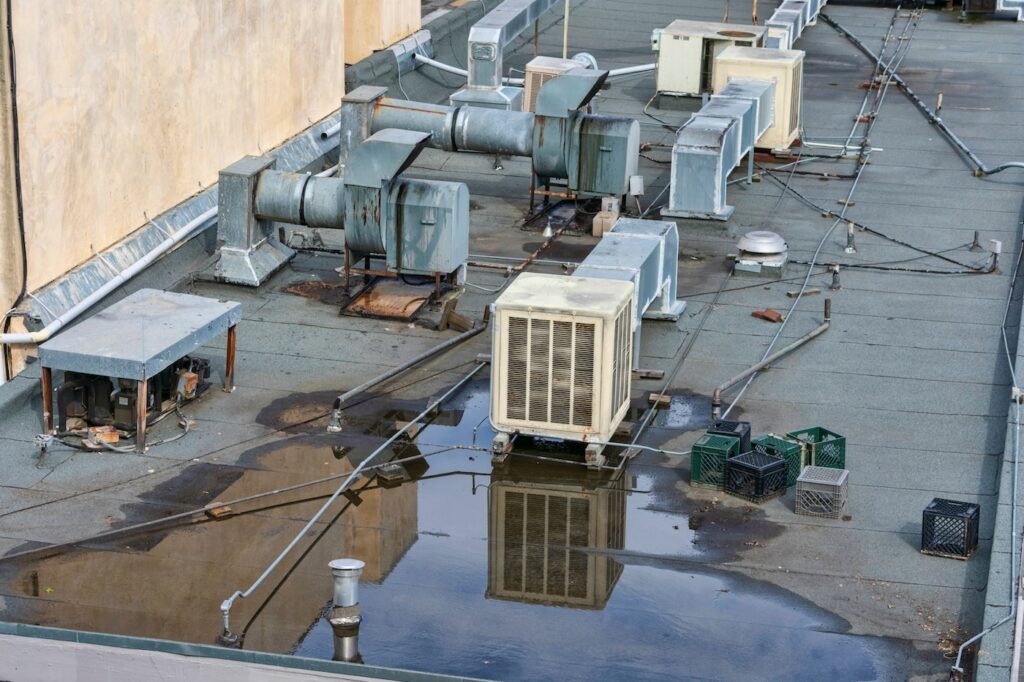
3. Ponding Water
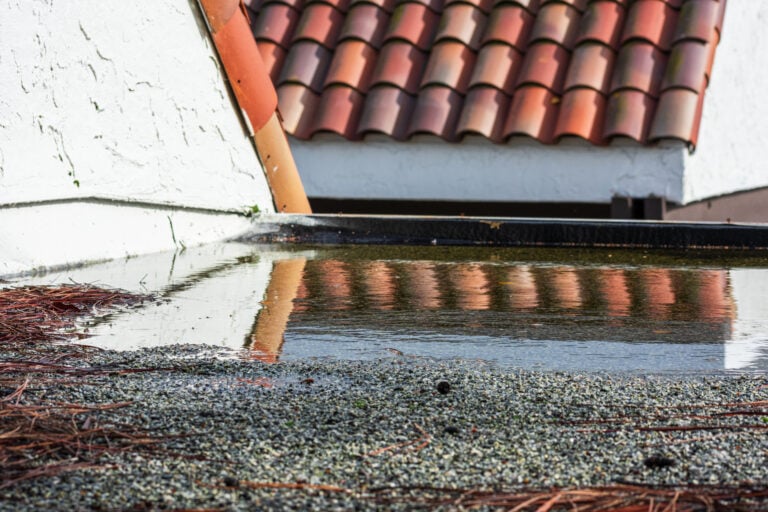
Standing water on flat roofs after a storm can signal drainage issues or structural problems.
- Water that remains for more than 48 hours
- Uneven roof surfaces
- Clogged or damaged drains
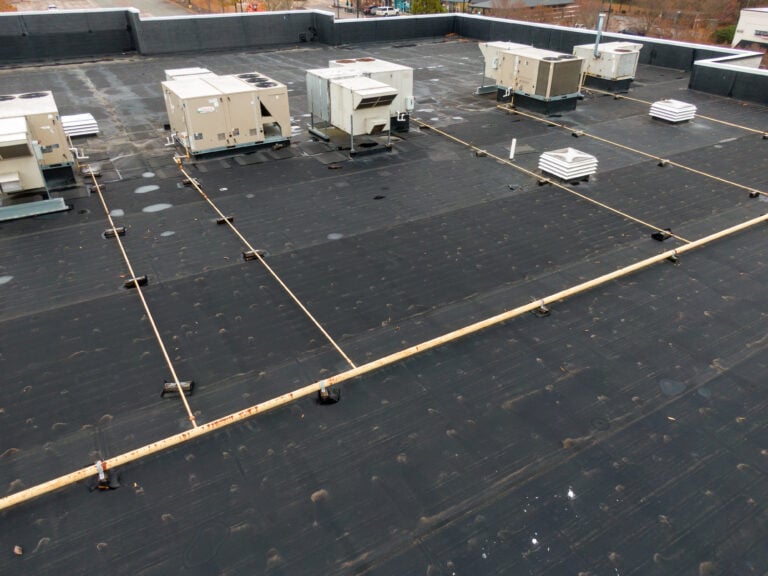
4. Damaged HVAC or Rooftop Equipment
Storms can impact more than just the roof surface.
- Displaced or damaged rooftop units
- Loose flashing around equipment
- Exposed or damaged connections
5. Granule Loss or Surface Wear
On certain roofing systems, surface wear can indicate storm damage.
- Worn or exposed areas
- Debris buildup in drains
- Changes in texture or appearance
6. Loose or Missing Components
Wind can loosen or remove key parts of your roofing system.
- Missing fasteners or panels
- Lifted seams
- Detached edge materials
4 Steps to Take After Storm Damage
Taking the right steps after storm damage can protect your commercial property and simplify the repair process.
1. Inspect Safely from the Ground
Avoid climbing onto the roof immediately after a storm.
- Look for visible damage from ground level
- Check for debris or obvious structural issues
- Note any areas of concern
2. Document the Damage
Documentation of damage is critical for insurance claims.
- Take photos and videos of visible damage
- Capture interior signs like leaks or stains
- Record the date and time of the storm
3. Schedule a Professional Inspection
A roofing contractor can perform a detailed assessment of your roof.
- Identify hidden or structural damage
- Provide recommendations for storm damage repairs
- Help determine if immediate action is needed
4. Prevent Further Damage
Temporary measures can help protect your building.
- Cover damaged areas if accessible
- Clear debris from drains
- Monitor for ongoing leaks
Preventative Maintenance for Storm Protection
Regular maintenance plays a major role in reducing the impact of storm damage and extending the life of your roofing systems. Proactive care is one of the most effective ways to avoid unexpected issues and protect your investment.
- Routine inspections: Regular inspections, ideally twice a year and after major weather events, can help identify wear and tear before it becomes a problem.
- Drainage maintenance: Keeping drains clear prevents water buildup on flat roofs.
- Flashing care: Resealing flashing helps prevent water intrusion at vulnerable points.
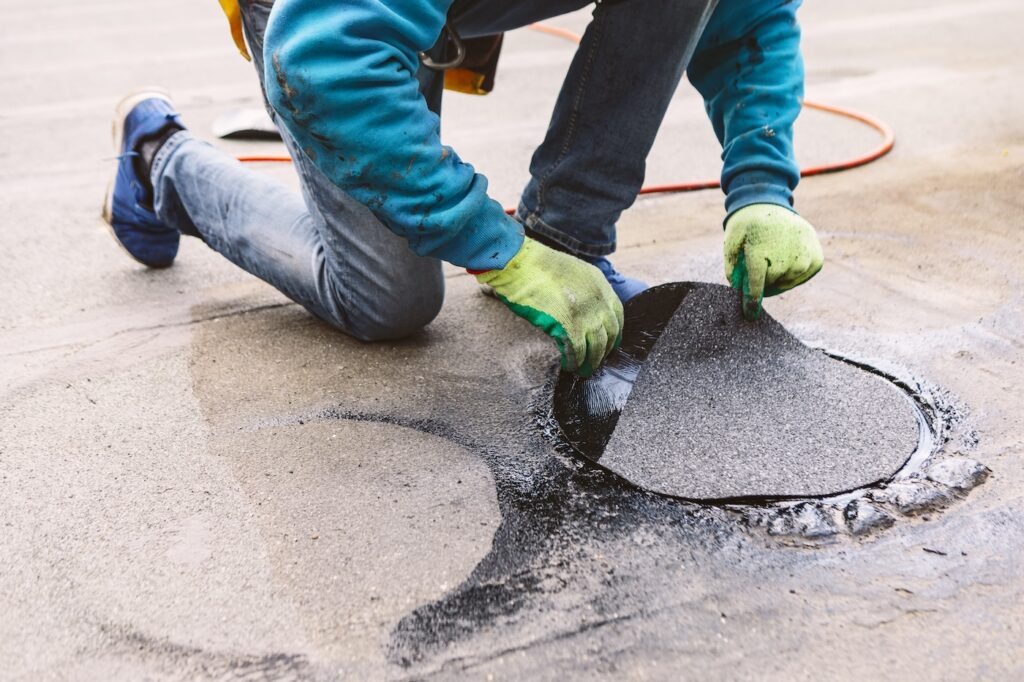
- Seam reinforcement: Sealants and fabrics are commonly used for patching cracks and holes in roofs.
Preventative maintenance steps include cleaning drainage systems, resealing flashing, and reinforcing seams before storm season to reduce the risk of major damage.
Temporary Solutions vs Long-Term Repairs
After storm damage, it’s important to understand the difference between short-term fixes and long-term solutions.
- Temporary fixes: Tarps or sealants that stop immediate water intrusion
- Storm damage repairs: Targeted work to restore affected areas
- Roof replacement: Required if damage is widespread or structural
A professional roofing contractor can help determine the right approach based on your roof’s condition.
Insurance and Commercial Roof Storm Damage
Storm damage is often covered by insurance, but proper steps must be taken to ensure a successful claim. Acting quickly and working with experienced professionals can make a significant difference in the outcome.
According to the Insurance Information Institute, severe convective storms generated over $51 billion in insured losses in 2025 alone — making thorough documentation and prompt reporting critical to a successful insurance claim.
- Act quickly: Delays can complicate the claims process
- Provide documentation: Photos and reports support your claim
- Work with professionals: Contractors can assist with inspections and reporting
Why Fast Action Matters
Delaying action after storm damage allows problems to worsen over time. Water intrusion can spread quickly, damaging insulation, weakening the structure, and increasing the risk of mold growth.
Responding quickly helps protect your commercial property, reduces downtime, and improves the chances of resolving the issue with repairs instead of a full replacement.
Trust Advanced Solutions for Commercial Roof Storm Damage
Advanced Solutions provides expert services for commercial roof storm damage, from inspections to complete storm damage repairs. Our team understands how severe weather impacts roofing systems and responds quickly to protect your building.
Whether you need a professional inspection, help with an insurance claim, or long-term solutions for storm damage, we deliver reliable service that protects your investment and extends your roof’s lifespan. Contact Advanced Solutions today to schedule your inspection. We’re based in Southlake, TX and proudly serve commercial property owners nationwide.