Featured Article
Built Up Roof: How BUR Systems Work
Few roofing systems have stood the test of time the way a built up roof has. From warehouses and industrial buildings to schools and retail centers, BUR roofs have been a go-to solution for commercial and industrial buildings on low slope roofs for well over a century. Exploring a commercial flat roof system for your building means understanding how BUR actually works, what it is made of, and whether it still holds up against more modern alternatives.
In this guide, we will cover:
- How BUR systems are constructed layer by layer
- The different materials used and how they work together
- Where BUR performs best and where other systems may be a better fit
- How BUR compares to single-ply membranes on key factors
- Common questions property owners ask before choosing BUR
How a Built Up Roof Is Constructed
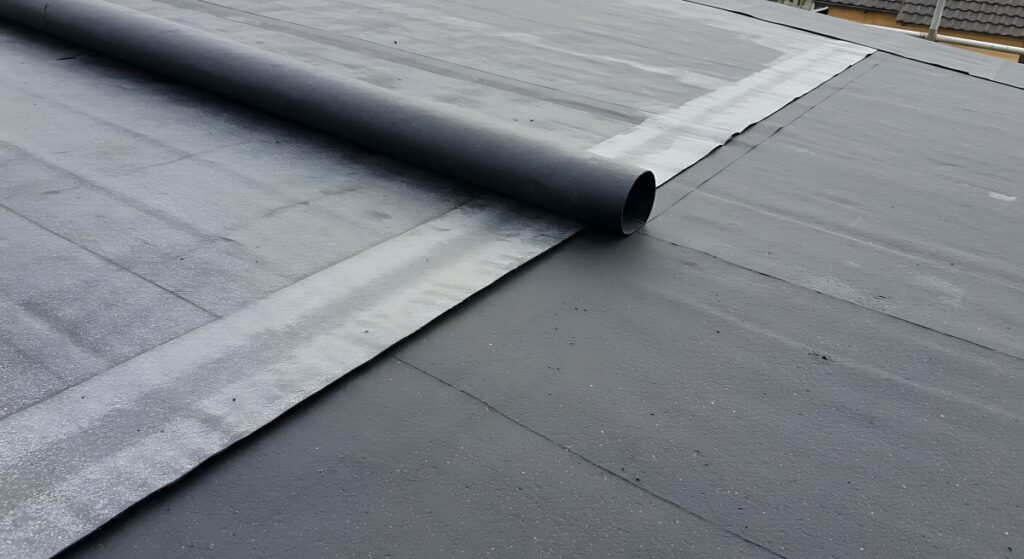
A built up roofing system earns its name from the way it is built: multiple alternating layers of bitumen and roofing felts are applied directly over the roof deck, creating a thick, seamless multi layered roofing system. Unlike single-ply systems that rely on a single sheet of material, BUR builds redundancy into the roof itself by using ply sheets fused together into one continuous barrier. It is one of the oldest commercial roofing systems still in regular use today, particularly on flat roofs where standing water resistance and puncture protection are non-negotiable. If one layer of the roof surface is compromised, the layers beneath it continue to provide waterproofing protection, which is why building owners managing high-value assets have trusted this approach for generations.
Properties across Springfield, Missouri and the surrounding region face heavy spring rains, summer heat, and occasional severe storms that test roofing systems hard. We’re proud to serve home and business owners in Springfield, Missouri and nearby communities with commercial roofing services and more.
The Role of Bitumen in the System
Bitumen is the adhesive and waterproofing agent at the core of every BUR system. It is applied in hot or cold form between each ply of reinforcing felt, bonding the layers together into a single monolithic membrane. Hot applied asphalt is the most traditional method, though cold applied adhesive systems have grown in popularity for projects where open flame is a concern. The choice between coal tar and asphalt bitumen affects both the performance and the smell of the finished roof, with asphalt being the more widely used option across roofing materials for commercial buildings today.
The Surfacing Layer
The top surface of a BUR system protects the bitumen layers below from UV exposure, physical damage, and weathering. Common surfacing options include gravel or slag embedded in a flood coat of bitumen, smooth cap sheets, and reflective coatings. Gravel surfacing remains one of the most durable choices for high-traffic roofs, while reflective cap sheets are increasingly popular for property owners looking to improve energy efficiency.
5 Key Layers of a Built Up Roofing System
Understanding what goes into a BUR system makes it easier to see why the system performs the way it does.
1. The Roof Deck
The deck is the structural foundation everything else rests on, and its condition matters enormously to the performance of the finished roof. Wood, concrete, and metal decks all work with BUR, but any soft spots or moisture damage need to be addressed before installation begins.
- Structural soundness: The deck must be able to support the added weight of multiple bitumen and felt layers.
- Moisture content: Wet or poorly dried decking can cause blistering in the finished membrane.
- Surface preparation: A clean, dry deck is essential to proper bitumen adhesion throughout the system.
2. The Vapor Retarder
In climates with significant humidity, a vapor retarder is installed directly over the deck to control moisture movement from inside the building up into the roofing system. Skipping this layer in the wrong climate can lead to condensation within the insulation, which shortens the life of the entire assembly.
- Moisture control: Prevents interior humidity from migrating into the roofing system and damaging insulation.
- Building type matters: High humidity occupancies like commercial kitchens or pools particularly benefit from a well-specified vapor retarder.
- Material options: Vapor retarders are available in sheet and fluid-applied forms depending on the application.
3. Thermal Insulation
Insulation is installed over the deck or vapor retarder to improve energy performance and meet building code requirements. Polyisocyanurate board, commonly called polyiso, is the most widely used insulation in BUR systems because of its high R-value and compatibility with hot asphalt.
- Energy code compliance: Most commercial buildings are required to meet minimum R-value thresholds, making insulation selection a code-driven decision.
- Tapered insulation: Tapered polyiso boards can be used to create slope on an otherwise flat deck, helping direct water toward drains and reduce ponding.
- Compatibility: Insulation boards need to be rated for use with hot asphalt to avoid delamination during installation.
4. The Reinforcing Plies and Bitumen Layers
This is the core of the BUR system. Multiple layers of reinforcing felt, typically fiberglass or organic mat, are mopped into place with hot bitumen until the required number of plies is reached. A three-ply or four-ply system is standard for most commercial applications, with more plies used on roofs that need extra durability or fire resistance. Proper installation of this layer is critical, and roofing professionals with hands-on BUR experience are essential to achieving the ply adhesion and bitumen coverage that determine how the finished system performs over its lifetime.
- Ply count: More plies generally mean more durability and a longer service life.
- Felt type: Fiberglass felts resist moisture better than organic felts and are the more common choice on modern BUR installations.
- Continuous membrane: Each layer adds to a single fused barrier rather than layered independent sheets.
5. The Surfacing Layer
The top layer protects everything beneath it from sun, weather, and physical wear. Gravel embedded in a flood coat of bitumen is one of the most durable surfacing options, while smooth and reflective cap sheets offer better solar reflectance for buildings prioritizing energy efficiency.
- Gravel surfacing: Provides excellent UV and physical protection and is a proven choice for heavy-use commercial roofs.
- Reflective cap sheets: Help reduce rooftop temperatures and can contribute to energy code compliance on buildings with strict efficiency requirements.
- Coatings: A reflective roof coating can be applied over an existing smooth BUR surface to extend service life and improve reflectivity without a full replacement.
BUR vs. Single-Ply Membranes
Property owners often compare BUR directly against TPO, EPDM, PVC, and modified bitumen roofing systems. Modified bitumen roofs grew out of BUR technology and share some of the same layered construction principles, while single-ply membranes take a fundamentally different approach. Each system has distinct strengths depending on the building type, climate, and budget.
| Factor | Built Up Roof | Single-Ply Membrane |
| Layers | Multiple fused plies | Single sheet |
| Lifespan | 20 to 40 years | 15 to 30 years |
| Upfront Cost | Moderate to high | Moderate |
| Puncture Resistance | Excellent | Moderate |
| Installation Complexity | High | Moderate |
According to the International Institute of Building Enclosure Consultants, built-up roofing systems have been protecting commercial buildings since the 1870s and have continued to evolve and set performance benchmarks for the commercial roofing industry ever since, a track record no single-ply system can yet match by sheer longevity.
Common FAQs About Built Up Roofing
Property owners considering BUR for their next project tend to ask similar questions before committing. Here are the ones we hear most often.
How long does a built up roof last?
A well-maintained BUR system typically lasts 20 to 40 years depending on the number of plies, the quality of materials, and ongoing maintenance. Thicker systems with more plies tend to reach the higher end of that range.
Is BUR still a competitive option compared to newer single-ply systems?
Yes, particularly for roofs where puncture resistance and multi-layer redundancy are priorities. BUR’s proven track record and strong performance in extreme weather conditions keep it relevant alongside newer membrane technologies.
How heavy is a built up roofing system?
BUR systems are heavier than single-ply membranes due to the multiple layers of felt and bitumen. A structural assessment is recommended before installing BUR on a building that has not carried this type of roofing before.
Can a built up roof be repaired instead of replaced?
In many cases, yes. Isolated blisters, seam failures, and surface damage can often be repaired without replacing the entire system, which is one of BUR’s practical long-term advantages.
Does BUR work well in climates with extreme heat or cold?
BUR performs well across a range of climates. Asphalt-based systems handle heat well, and the multi-ply construction provides solid protection in cold climates where freeze-thaw cycling can stress thinner membranes.
Advanced Solutions: The Right Roof for Your Building
BUR has earned its reputation through more than a century of performance, and it remains one of the most reliable commercial roofing systems for flat and low slope buildings that need serious durability. Our team has helped property owners across Texas, Missouri, Kentucky, Tennessee, and Georgia evaluate roofing systems and make confident decisions, whether that means BUR, single-ply, metal, or something in between.
If your building needs a new roof or an honest assessment of the one it has, we are ready to help. Reach out to our team to schedule your inspection and get a straightforward recommendation.