Featured Article
EPDM Rubber Roofing: Benefits and Longevity
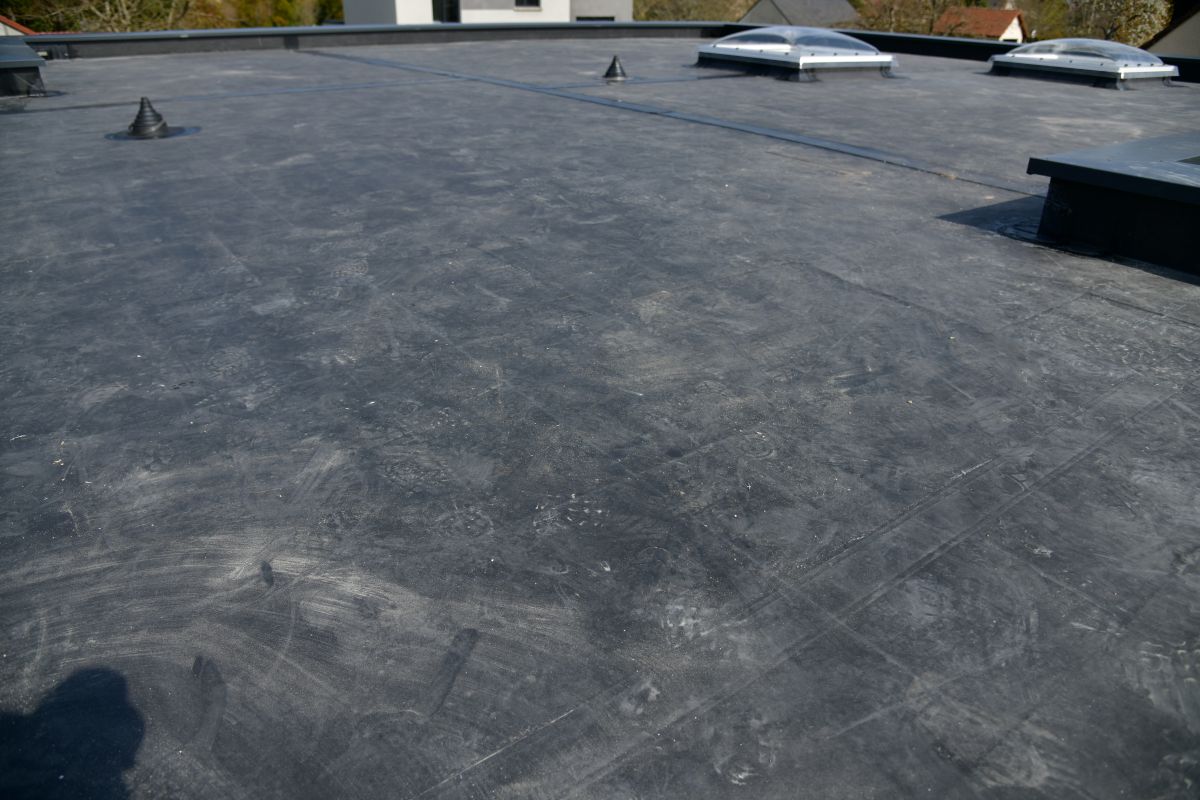
When commercial property owners ask about flat roofing systems that balance cost, performance, and service life, EPDM rubber roofing comes up consistently near the top of the list. It has been one of the most widely used single-ply membranes in the commercial market for decades, and the reasons why have only grown stronger as installation methods and materials have improved. Thinking through your commercial flat roofing options before committing to a system is always the right call, and EPDM is worth understanding in detail before making that decision.
In this guide, we will cover:
- What EPDM rubber roofing is and how it is installed
- The key performance benefits that drive its popularity
- How EPDM holds up over time compared to other single-ply membranes
- What maintenance looks like across the life of the system
- Common questions commercial property owners ask before choosing EPDM
What EPDM Rubber Roofing Actually Is
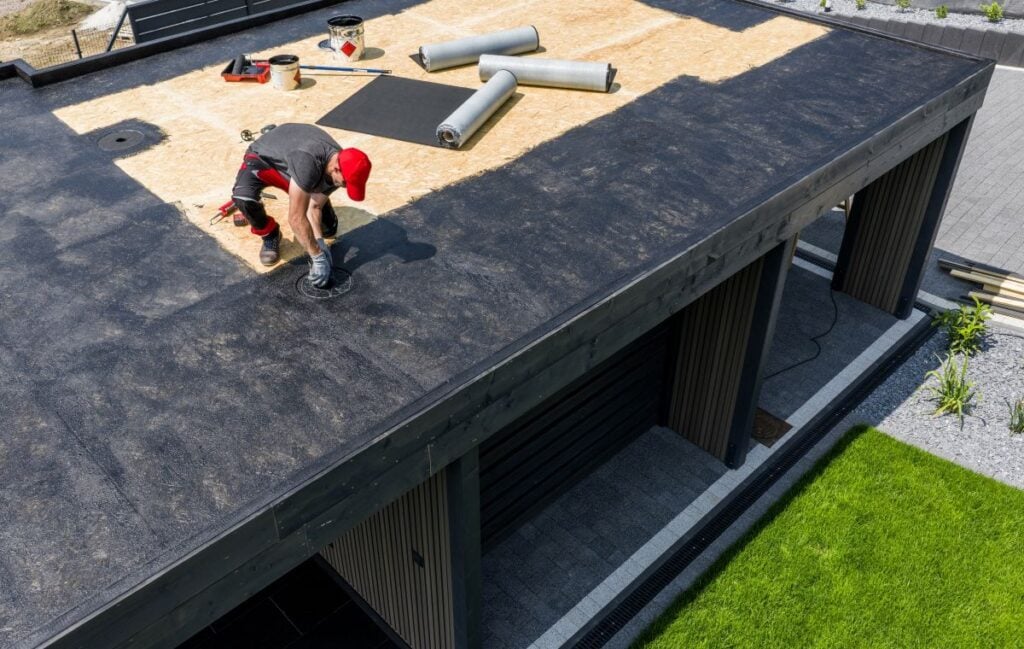
EPDM stands for ethylene propylene diene monomer, a synthetic rubber membrane manufactured in large sheets and installed across the roof surface in a continuous waterproof layer. The membrane is available in thicknesses ranging from 45 mil to 90 mil, with thicker sheets offering better puncture resistance and longer service life on roofs that see regular foot traffic or heavy weather exposure.
Properties across Nashville, Tennessee and the surrounding region deal with hot summers, winter ice events, and significant spring storm activity, all of which test the flexibility and weather resistance of any roofing membrane over time. We’re proud to serve home and business owners in Nashville, Tennessee and nearby communities with commercial roofing services and more.
Installation Methods and How They Affect Performance
EPDM can be installed using three primary methods, each with different implications for cost, wind resistance, and long-term performance.
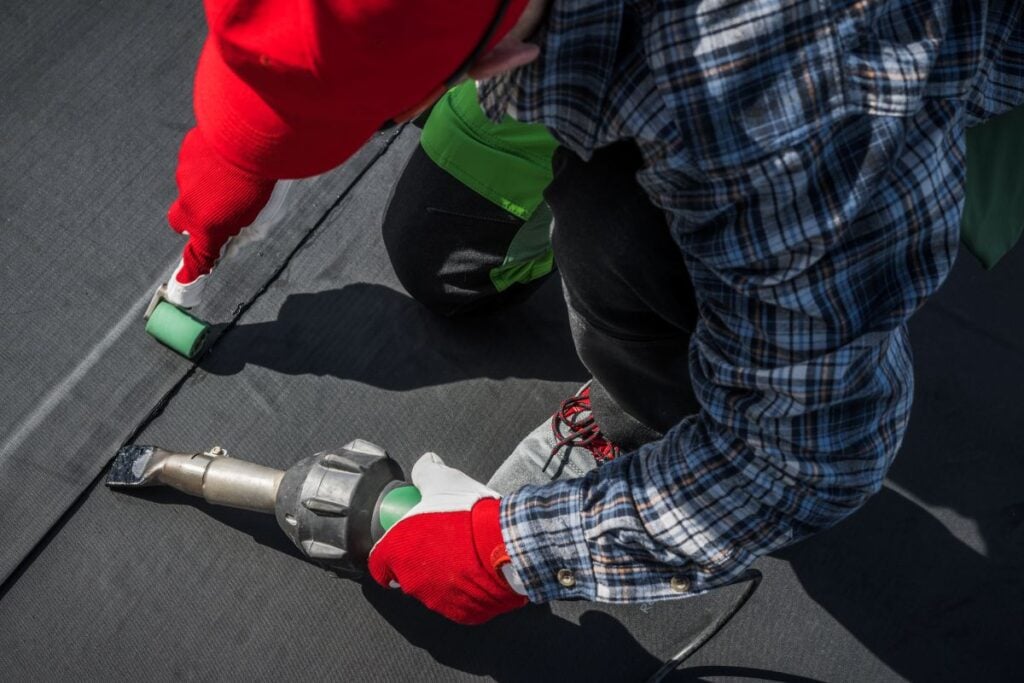
- Fully adhered: The membrane is bonded to the substrate across its entire surface using adhesive, which provides the strongest wind uplift resistance and the cleanest finished appearance.
- Mechanically fastened: Fasteners and cover strips secure the membrane at intervals, making this a faster and lower-cost installation method, though it requires careful fastener spacing to meet wind design requirements.
- Ballasted: Loose-laid membrane held in place by gravel or pavers, which is the simplest installation method but adds significant weight to the roof structure.
10 Benefits of EPDM Rubber Roofing for Commercial Properties
Few commercial roofing systems offer the combination of advantages EPDM brings to flat and low slope applications. Here are the ten that come up most consistently when property owners are evaluating their options.
- Exceptional longevity: According to the EPDM Roofing Association, properly designed, installed, and maintained EPDM roof membranes have an expected service life of 38 years, with field-verified roofs reaching 45 to 50 years in some documented cases.
- Outstanding weather resistance: EPDM holds up well against UV radiation, ozone, temperature extremes, and heavy rain without degrading the way some other membranes do over time.
- Cold-weather flexibility: Unlike many single-ply membranes that become brittle in freezing temperatures, EPDM retains its flexibility, which reduces cracking and seam stress during winter freeze-thaw cycles.
- Low upfront cost: EPDM is one of the most cost-effective single-ply roofing membranes available, which makes it a practical first choice for property owners managing tight capital budgets.
- Ease of repair: Small tears, punctures, and seam failures can often be repaired quickly with compatible patch materials and adhesive without disturbing the surrounding membrane.
- Lightweight construction: EPDM membranes are significantly lighter than BUR or modified bitumen systems, which reduces structural load and simplifies installation on buildings with tighter load tolerances.
- Chemical and ozone resistance: The rubber chemistry of EPDM makes it inherently resistant to ozone and many industrial chemicals, which is a meaningful advantage in commercial and light industrial settings.
- Environmental profile: EPDM is recyclable at the end of its service life and is frequently manufactured with recycled content, which supports sustainability goals on projects where environmental impact matters.
- Low maintenance requirements: Routine inspections and minor upkeep are generally all that is needed to keep EPDM performing well across its full service life.
- Broad compatibility: EPDM works well with a wide range of insulation types and roof deck materials, making it a flexible choice for both new construction and re-roofing projects.
How EPDM Compares to Other Single-Ply Systems
EPDM is frequently evaluated alongside TPO and PVC before a final membrane selection is made. Each system has real advantages depending on building use, climate, and budget priorities.
| Factor | EPDM | TPO | PVC |
| Typical Lifespan | 25 to 50 years | 15 to 20 years | 20 to 30 years |
| Cold Weather Performance | Excellent | Good | Fair |
| Chemical Resistance | Moderate | Good | Excellent |
| Reflectivity | Low (black) | High (white) | High (white) |
| Upfront Cost | Lowest | Moderate | Highest |
One practical consideration worth noting: EPDM is typically manufactured in black, which absorbs more heat than white TPO or PVC membranes. For buildings in hot climates where cooling costs are a primary concern, a white-coated EPDM system or a switch to TPO may be worth evaluating alongside the base cost comparison.
What Maintenance Looks Like Over the Life of an EPDM Roof
EPDM is genuinely low-maintenance compared to many other commercial roofing systems, but that does not mean it can be ignored entirely. A consistent maintenance approach is one of the biggest factors in whether a system reaches the higher end of its potential service life.
- Biannual inspections: Checking seams, flashing, and penetrations twice a year, particularly after storm season, catches small issues before they become larger problems.
- Debris removal: Keeping the membrane surface clear of standing debris reduces the risk of membrane punctures and drainage blockages.
- Seam monitoring: Seams are the most vulnerable part of any EPDM installation and should be checked regularly for signs of lifting or separation.
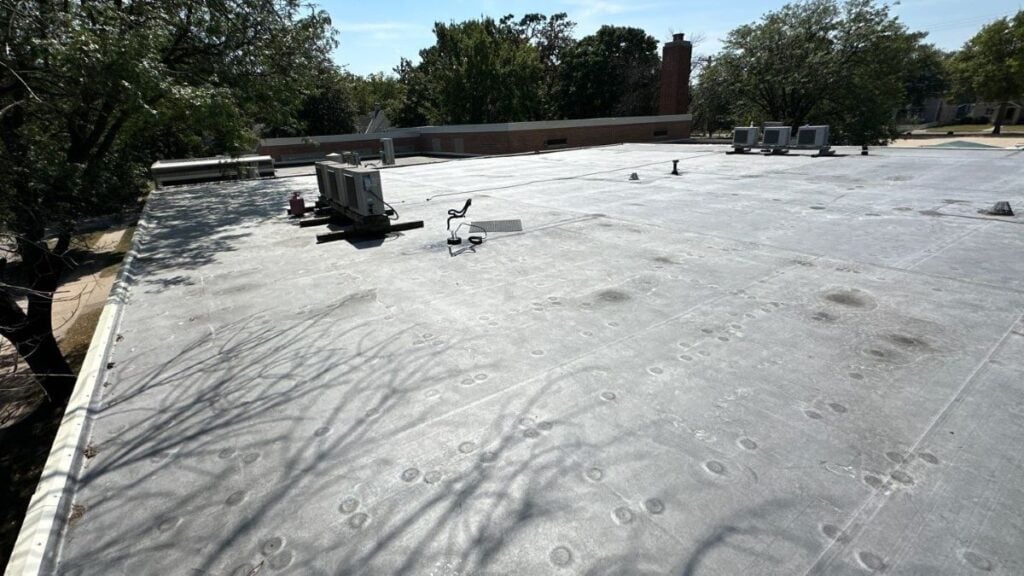
- Coating at mid-life: Applying a reflective coating around year 15 to 20 can restore solar reflectance and add years of additional service life to an otherwise sound membrane.
Common FAQs About EPDM Rubber Roofing
Property owners evaluating EPDM for the first time tend to ask similar questions before scheduling an installation or inspection. Here are the ones we hear most often.
How long does EPDM roofing actually last on a commercial building?
With proper installation and maintenance, most commercial EPDM roofs perform well for 25 to 50 years. The EPDM Roofing Association formally reports an expected service life of 38 years for properly designed and maintained systems.
Is EPDM roofing a good choice for buildings in hot climates?
EPDM performs well in heat, though its black surface absorbs more solar energy than reflective white membranes. A white coating applied over the surface can address this if energy efficiency is a primary concern for the building.
Can an EPDM roof be repaired without full replacement?
Yes, and this is one of EPDM’s most practical advantages. Most punctures, tears, and seam failures can be patched with compatible materials, which makes mid-life repairs far more manageable compared to some other systems.
What is the difference between 45 mil and 60 mil EPDM?
Membrane thickness directly affects puncture resistance and overall durability. A 60 mil membrane is the more common commercial specification because it holds up better under foot traffic and equipment loads than the thinner 45 mil option.
Does EPDM roofing work with insurance claims after storm damage?
Documented storm damage to an EPDM system can support an insurance claim, particularly when paired with a thorough inspection report and clear documentation from an experienced roofing contractor.
Advanced Solutions: Commercial Roofing You Can Trust
EPDM rubber roofing has earned its place as one of the most reliable flat roofing systems in commercial construction, and it remains a strong option for property owners who prioritize long service life and manageable maintenance costs. Our team has helped property owners across Texas, Missouri, Kentucky, Tennessee, and Georgia evaluate and install roofing systems that fit their building, their budget, and their long-term ownership goals.
Whether EPDM is the right system for your property or another option makes more sense, Advanced Solutions will give you a straight answer backed by real experience. Schedule your free roof assessment and let us take a look at what your building actually needs.