Featured Article
Silicone Roof Coating: When It Makes Sense in 2026
If your commercial roof is aging but not quite ready for a full tear-off, a silicone roof coating might be the smartest move you make this year. As more property owners look for ways to stretch their roofing budget without sacrificing performance, silicone coatings have become one of the most requested solutions for flat and low slope commercial roofs. Before you commit to a commercial roof restoration project, it helps to understand exactly when this option makes sense and when it does not.
In this guide, we will cover:
- What silicone roof coatings actually do and how they work
- The roof types and conditions where silicone performs best
- Situations where a coating is not the right call
- How silicone stacks up against other coating options
- What property owners should expect from cost and longevity
What a Silicone Roof Coating Actually Does
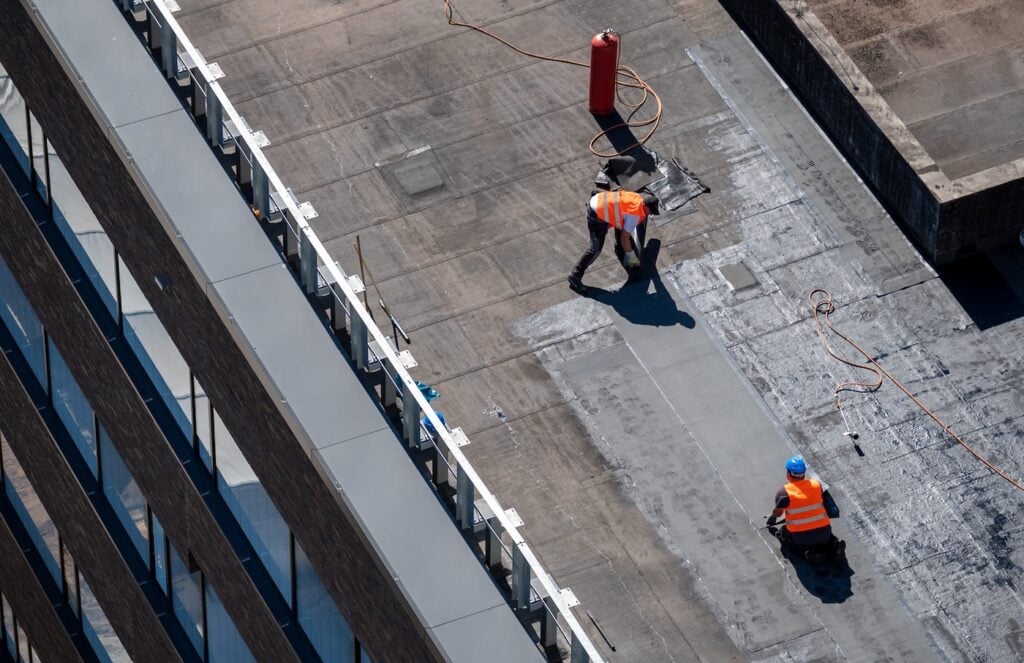
A silicone roof coating is a liquid applied membrane that cures into a seamless, waterproof layer over an existing roof surface. Unlike a full replacement, the coating bonds directly to the substrate, sealing seams, fastener heads, and minor surface cracks while restoring reflectivity. For commercial property owners managing tight operating budgets, that combination of waterproofing and energy efficiency is a major draw.
Most coating products are applied in two layers: a base coat that bonds to the existing roof surface and a top coat that delivers the finished, highly reflective surface homeowners and property managers actually see. Many silicone systems cure to a bright white finish, which boosts solar reflectance and helps keep interior temperatures more stable. This same approach works well on metal roofs, single ply membranes, and older modified bitumen systems alike, making silicone one of the more versatile coating options on the market today.
Silicone holds up especially well in climates with heavy humidity, frequent rain, and prolonged UV exposure. Properties in Atlanta, Georgia and the surrounding region deal with all three on a regular basis, which is part of why coatings have become such a common recommendation for commercial buildings in the area. We’re proud to serve home and business owners in Atlanta, Georgia and nearby communities with roof coating services and more.
Surface Prep and the Curing Process Matter Most
No coating product, no matter how advanced, will perform well over a dirty or damaged substrate. Proper surface preparation is crucial for longevity, and most coating failures trace back to skipped or rushed prep work rather than the coating itself.
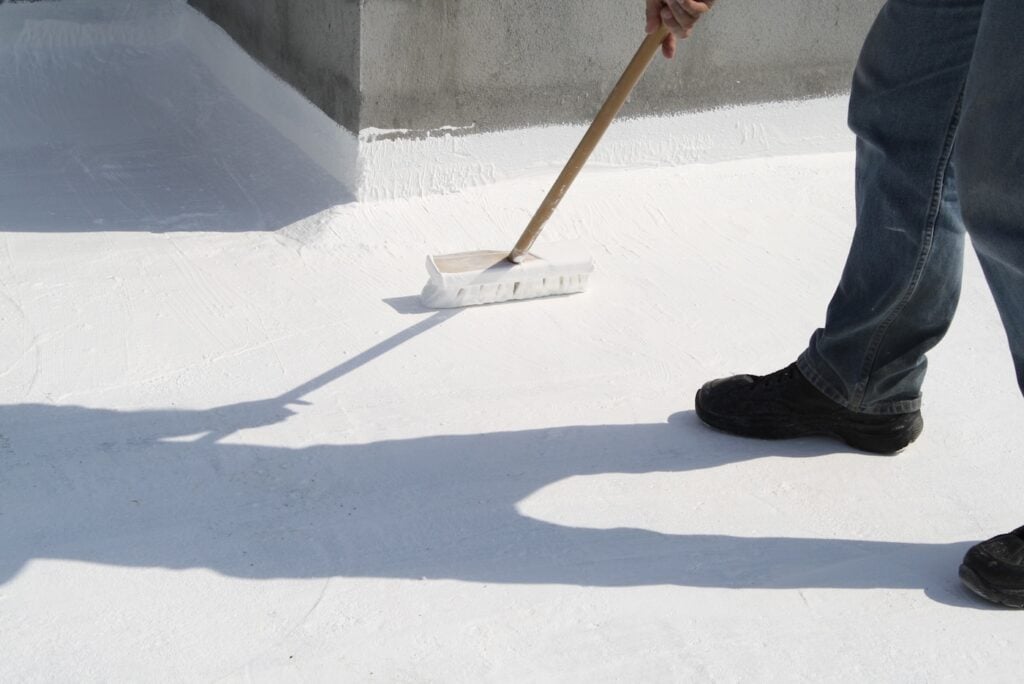
- Cleaning and pressure washing: Removing dirt, chalking, and biological growth gives the base coat a surface it can actually bond to.
- Repairing seams and flashing: Any existing cracks or open seams need to be addressed before a coating is applied, not after.
- Allowing for a full curing process: Silicone coatings need adequate time and the right weather window to cure properly before the top coat is added or the roof is exposed to heavy rain.
Why Ponding Water Changes the Equation
Many commercial flat roofs develop areas of ponding water over time, especially as the building settles or drainage slows. This is one area where silicone genuinely separates itself from other coating types. Because silicone resists UV degradation and does not break down when submerged for extended periods, it remains one of the few coating chemistries that can be applied directly over roofs with chronic ponding issues. Other coatings, like acrylic, can soften or wash away under the same conditions, which limits their usefulness on roofs with poor drainage.
5 Situations Where Silicone Roof Coating Makes Sense
Not every roof is a good candidate for a coating, and not every coating is a good fit for silicone specifically. These five scenarios tend to be the clearest indicators that silicone is worth exploring for your property.
- Your roof has minor ponding water: Silicone handles standing water far better than acrylic or other water based coatings, making it a strong option for roofs with drainage challenges.
- The existing membrane is structurally sound: If the underlying roof has no major structural damage, a coating can extend its life without the cost of a full replacement.
- You want to reduce cooling costs: Reflective silicone coatings lower roof surface temperatures, which can ease the load on rooftop HVAC units during peak summer months.
- The roof is nearing the end of its warranty but is not failing: Coatings are often used as a way to buy several more years of service life before a full replacement becomes necessary.
- Minimal business disruption is a priority: Coatings are applied directly over the existing roof, which means little to no demolition and far less downtime than tear off and replacement projects.
When Silicone Is Not the Right Fit
Coatings are a great tool, but they are not a universal fix. If your roof has widespread structural damage, saturated insulation, or recurring leaks tied to the deck itself, a coating will only mask the underlying problem temporarily. In these cases, a full inspection is essential before deciding on a repair strategy.
It is also worth noting that silicone coatings can become slippery when wet, which matters for roofs with frequent foot traffic for maintenance or HVAC servicing. Property managers should weigh this against the building’s specific use case before moving forward.
- Active structural damage: Coatings cannot fix sagging decks, rotted insulation, or compromised structural members.
- Frequent rooftop foot traffic: Silicone’s slick surface when wet can create a slip hazard for maintenance crews walking the roof regularly.
- Roofs already past their realistic service life: If a membrane has multiple failure points, a full replacement is usually more cost effective long term than repeated coating cycles.
Silicone vs. Other Common Roof Coating Types
Choosing the right coating chemistry depends heavily on your roof’s exposure to moisture, sun, and foot traffic. Silicone is often compared against acrylic, elastomeric coatings, and polyurethane, and in some cases against spray polyurethane foam systems that combine insulation with a protective coating layer. Here is how silicone stacks up against the most common alternatives.
| Coating Type | Best For | Ponding Water Resistance | Typical Lifespan |
| Silicone | Humid climates, roofs with drainage issues | Excellent | 15 to 20 years |
| Acrylic / Elastomeric | Dry climates with minimal ponding | Poor | 8 to 12 years |
| Polyurethane | High foot traffic areas | Good | 10 to 15 years |
| Spray Polyurethane Foam | Roofs needing added insulation | Fair | 15 to 20 years |
Silicone roof coatings are considered environmentally friendly compared to many traditional roofing materials, largely because they extend the life of an existing roof and reduce the volume of material sent to landfills. High-solids silicone coatings also contain extremely low VOCs, which matters for property owners concerned about air quality during and after application.
According to Lawrence Berkeley National Lab’s Heat Island Group, a clean white roof that reflects 80 percent of sunlight stays about 50 degrees Fahrenheit cooler on a typical summer afternoon than a grey roof reflecting only 20 percent of sunlight, which is exactly the kind of reflectivity gain a properly applied silicone coating can deliver.
Common FAQs About Silicone Roof Coatings
Property owners researching coatings tend to ask many of the same practical questions before committing to a project. Below are the ones we hear most often from commercial clients across our service areas.
How long does a silicone roof coating last?
Most silicone coatings are warrantied for 10 to 20 years depending on the thickness applied and the manufacturer. With proper maintenance, many commercial roofs see even longer service life from a quality silicone application.
Can silicone be applied over any roof type?
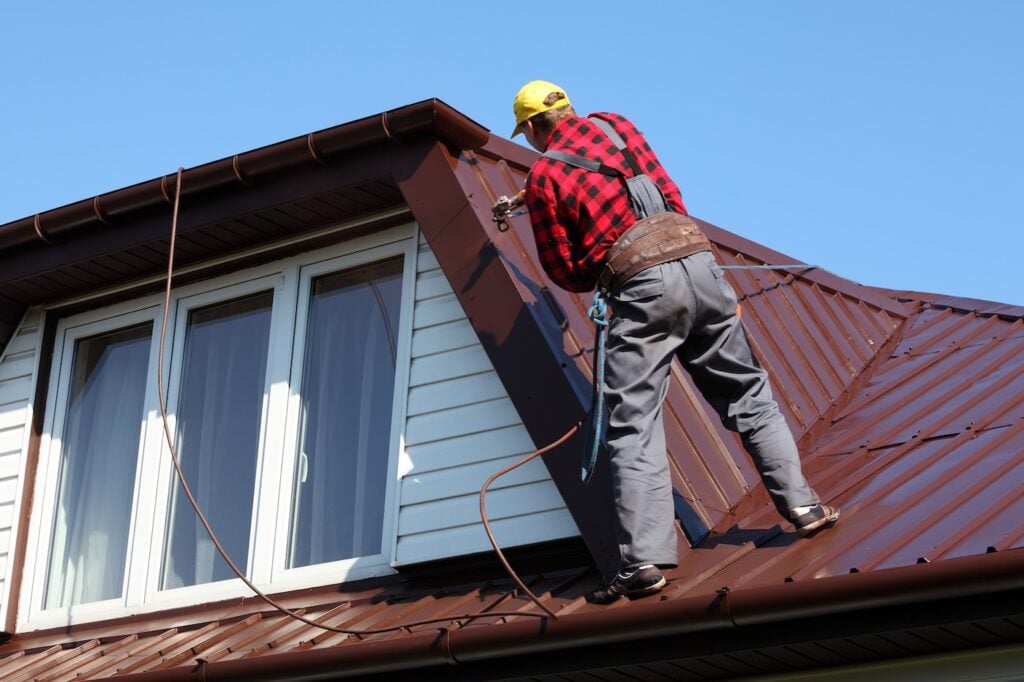
Silicone adheres well to most low slope commercial substrates, including modified bitumen, EPDM, metal, and existing acrylic or silicone coatings. A roof inspection is the best way to confirm compatibility before scheduling work.
Will a coating void my existing roof warranty?
It depends on the manufacturer and the current warranty terms. A licensed contractor can review your existing documentation and coordinate with the manufacturer to keep coverage intact wherever possible.
Does silicone coating help with insurance claims after storm damage?
In some cases, yes. If storm damage is documented before a coating is applied, it can support a claim while also protecting the roof from further deterioration while the claims process moves forward.
How much does a silicone roof coating cost compared to replacement?
Coatings typically cost a fraction of a full roof replacement, making them an appealing option for property owners looking to extend service life without a major capital expense.
How often should a coated roof be inspected?
Regular inspections should occur every six months, ideally once before and once after the peak storm season. Routine checks catch small issues like pinholes or seam separation before they turn into leaks.
Advanced Solutions: Commercial Roofing You Can Count On
Choosing the right roofing strategy for your commercial property is rarely simple, and silicone coatings are just one piece of a much bigger decision. Our team has guided property owners across Texas, Missouri, Kentucky, Tennessee, and Georgia through everything from coating projects to full insurance backed restorations, always with an emphasis on minimizing disruption to daily operations.
Whether your roof needs a coating, a repair, or a full evaluation after storm damage, Advanced Solutions brings decades of combined industry experience to every project. Our team will walk you through your options honestly, including when a coating makes sense and when it does not.
Ready to find out if a silicone roof coating is the right call for your building? Contact our team to schedule a professional roof inspection and get a clear, honest recommendation for your property.

Recent Articles